
The KAX CA11876 Engine Air Filter is the top pick for most buyers, making it a strong choice for anyone searching for the best premium air filter car. Its main advantage is an OEM-style replacement design that keeps installation simple when the part number matches your vehicle. Check fitment carefully, since one filter will not suit every model.
This guide is for drivers replacing a factory engine filter, improving intake protection, or seeking a higher-grade replacement without buying a performance intake kit. The key factors are exact dimensions, filter media, and the seal around the frame. A loose fit can let unfiltered air pass around the filter. The five picks below are ranked by fit, construction, value, and maintenance needs, with clear reasons and honest drawbacks for each.
Quick Comparison
| # | Product | Best For | Price | |
|---|---|---|---|---|
| 1 | KAX CA11876 Engine Air Filter | Budget-Friendly Engine Filter Replacement | ~$14 | View → |
| 2 | K&N KNA-5064 Engine Air Filter | Reusable Performance-Focused Filter Buyers | ~$21 | View → |
| 3 | KAX CA12295 Engine Air Filter | Direct-Fit Maintenance Shoppers | ~$14 | View → |
| 4 | EPAuto CP134 (CF10134) Cabin Air Filter | Cabin Air Quality Seekers | ~$10 | View → |
| 5 | ECOGARD XA10486 Engine Air Filter | Value-Minded Routine Maintenance | ~$18 | View → |
5 Premium Car Air Filters Worth Buying
These ranked picks count down from strong overall value to the top choice for drivers.
5. ECOGARD XA10486 Engine Air Filter

Best for: Owners needing a scheduled OEM-style replacement
The ECOGARD XA10486 is a replacement engine air filter for select Honda and Acura vehicles. It fits the 2016–2022 Honda Pilot 3.5L, 2018–2026 Odyssey 3.5L, 2021–2025 Acura TLX 2.0L, and 2017–2020 MDX 3.0L. Its filter media is designed to trap dust, dirt, pollen, and road debris before those particles reach the engine intake.
At around $18, it offers a low-cost option for routine maintenance. ECOGARD recommends replacing it every 12,000 miles, although the vehicle manufacturer’s schedule should take priority. A clean filter can help maintain steady airflow and consistent engine operation between service visits. The broad application list is useful, but fitment depends on the vehicle’s year and engine. The listing also names Honda Ridgeline and Passport compatibility, so buyers should confirm the exact vehicle through the manufacturer’s filter lookup before ordering. This filter replaces several OEM and aftermarket numbers, including Acura 17220-5J6-A10, FRAM CA11876 and CA12061, and Baldwin PA10058.
Pros
- Around $18, making routine replacement affordable.
- Filter media targets dust, pollen, dirt, and road particles.
- 12,000-mile replacement guidance provides a clear maintenance interval.
Cons
- Exact fit varies by model year and engine, so lookup verification is required.
- It does not include installation tools or help with other intake-service parts.
4. EPAuto CP134 (CF10134) Cabin Air Filter

Best for: Honda and Acura cabin filter replacements
The EPAuto CP134, also listed as CF10134, is a replacement cabin air filter with activated carbon. It fits a wide range of Honda and Acura vehicles. Applications include Honda Accord models from 2003 through 2022, Civic models from 2006 through 2015, CR-V models from 2007 through 2016, and Pilot models from 2009 through 2022. It also fits Acura MDX models from 2007 through 2020 and TLX models from 2015 through 2020. Always confirm the year and trim before ordering.
Activated carbon gives this filter an edge over basic particulate-only filters. It can help reduce common cabin odors and trap airborne dust before air reaches the passenger area. The filter cross-references to FRAM CF10134 and several Honda Genuine part numbers, including 80292-SHJ-A01 and 80292-SDA-A01. At around $10, it is an inexpensive maintenance part for many vehicles. The broad fitment list is useful, but it also makes careful compatibility checks necessary.
Pros
- Activated carbon helps reduce dust and everyday cabin odors.
- Fits many Honda and Acura cars, SUVs, and trucks.
- Costs around $10, making routine replacement affordable.
Cons
- It is not listed with a HEPA rating, so it may not meet high-level filtration needs.
- Fitment varies by vehicle year and model, so buyers must verify the exact application before purchase.
3. KAX CA12295 Engine Air Filter
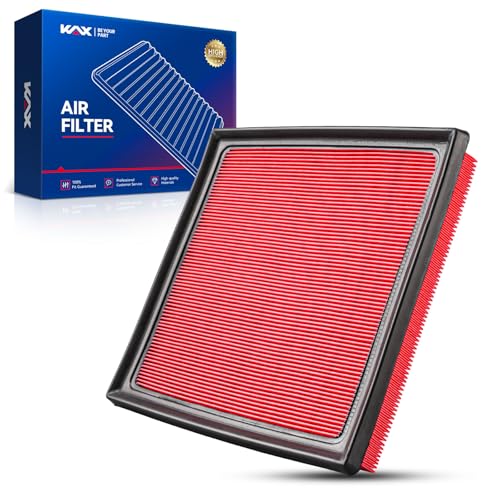
Best for: Subaru owners replacing factory air filters
The KAX CA12295 is a replacement engine air filter for select Subaru and Mitsubishi vehicles. Applications include the 2018–2026 Crosstrek, 2019–2026 Forester, 2020–2025 Outback and Legacy, 2019–2025 Ascent, 2017–2026 Impreza, 2022–2026 WRX, and 2023–2025 Outlander PHEV. It measures 9.1 by 8.6 by 1.5 inches and arrives as one boxed filter.
Its filter media combines oiled cotton gauze with embossed paper, according to the product specifications. KAX lists filtration efficiency up to 99.9% and a service interval of up to 20,000 miles, but actual replacement timing depends on driving conditions. The larger dust capacity may help maintain airflow between changes. At around $14, it costs less than many branded replacements. This filter is not washable or reusable, so owners must replace it rather than clean and reinstall it.
Pros
- Fits a wide range of Subaru models and one Mitsubishi PHEV.
- Oiled cotton gauze and embossed paper support particle filtration.
- A 20,000-mile listed service life may reduce replacement frequency.
Cons
- It is disposable, not washable or reusable.
- Vehicle fitment varies by model year and engine, so buyers should verify compatibility before ordering.
2. K&N KNA-5064 Engine Air Filter

Best for: Subaru owners wanting fewer filter changes
This K&N engine air filter fits select 2016 through 2026 Subaru models with 1.6, 2.0, or 2.4-liter H4 engines. Listed applications include the Ascent, Crosstrek, Forester, Impreza, and XV, though buyers should confirm the exact fit for their vehicle before ordering. At around $21, it costs about the same as many standard replacement filters.
The filter uses durable materials and is designed for replacement every 18,000 miles under normal highway driving. That is 50% longer than a typical 12,000-mile filter, based on the stated service intervals. K&N also rates its filter media at up to 99% efficiency, which can help keep dust and debris away from the engine. The interval works out to roughly 1.5 years for drivers covering 12,000 miles annually. A one-year limited warranty adds some purchase protection, but this remains a disposable replacement filter rather than a reusable, washable design.
Pros
- 18,000-mile replacement interval reduces routine maintenance compared with 12,000-mile filters.
- Filter media offers up to 99% stated filtration efficiency for engine protection.
- Fits several Subaru models and engine sizes from 2016 through 2026.
Cons
- The 18,000-mile interval assumes normal highway driving, so dusty roads or heavy traffic may require earlier replacement.
- Vehicle fitment varies by model, engine, and year, so the application list needs careful checking before purchase.
1. KAX CA11876 Engine Air Filter

Best for: Volkswagen and Audi owners replacing factory filters
The KAX CA11876 is a rectangular engine air filter for select Volkswagen and Audi vehicles. Its listed applications include the 2018–2024 Tiguan, 2015–2026 GTI, 2019–2026 Jetta 2.0T, and several Audi A3, Q3, S3, TT, and TTS models. Fitment varies by year and engine, so check the vehicle list before ordering. The box includes one filter, measuring 11.5 by 7 by 2.8 inches.
Its main selling point is a longer replacement interval than a basic paper filter. KAX rates this model for up to 20,000 miles, with oiled cotton gauze as the primary filtering material. The filter also uses embossed paper media, which is designed to hold more dust while keeping its shape. KAX claims 99.9% filtration efficiency, but actual results depend on installation and driving conditions. At around $14, it offers a low-cost maintenance option for compatible cars. It is not washable or reusable, so it still needs regular replacement rather than cleaning.
Pros
- Fits many Volkswagen and Audi models, including the GTI, Jetta, Tiguan, Q3, and A3.
- Oiled cotton gauze and embossed paper media support extended use, with a claimed interval of up to 20,000 miles.
- The 11.5-by-7-by-2.8-inch size provides a direct replacement format for listed applications.
Cons
- Compatibility depends on the exact year, engine, and trim, so a vehicle lookup is necessary.
- It cannot be washed or reused, which adds recurring replacement costs.
Buying Guide
Fitment is the most important factor when choosing a high-end automotive air filter. The correct part number and size protect the engine or cabin system, while a poor fit can let unfiltered air pass around the filter.
- Exact compatibility: Match the vehicle’s year, engine size, trim, and filter part number. Compare the old filter’s length, width, and height within about 1–2 millimeters.
- Filter type: Choose an engine intake filter for dust and debris, or a cabin filter for pollen, smoke, and odors. Do not substitute one for the other.
- Filter media: Look for synthetic or multi-layer media, plus activated carbon in cabin filters. Carbon models usually cost $15–$40, compared with roughly $8–$25 for basic cabin filters.
- Filtration and airflow: For engine filters, prioritize published ISO 5011 efficiency data and avoid products with no testing information. The filter should not restrict airflow beyond the vehicle maker’s specification.
- Replacement interval: Follow the owner’s manual, often 12,000–30,000 miles for engine filters and 12 months for cabin filters. A washable filter only makes sense if cleaning instructions and a replacement schedule are clear.
If you cannot have everything, prioritize exact fitment and the correct filter type before media, price, or extended service claims.
Frequently Asked Questions
How often should I replace a premium car air filter?
Premium car air filters usually need replacement every 12,000 to 30,000 miles, depending on filter type and driving conditions. Engine filters often last longer on clean roads, while cabin filters may need changing sooner in cities, dusty areas, or during heavy pollen seasons. Check the vehicle manual before choosing a replacement.
What makes a premium automotive air filter worth buying?
A premium automotive air filter is worth buying when it offers stronger filtration, solid construction, and a confirmed fit for your vehicle. Some use multiple filter layers or synthetic media, while budget paper units may cost less upfront. Compare the service interval, dust capacity, and price before paying more.
Can a high-quality engine air filter improve fuel economy?
A clean, high-quality engine air filter can support normal fuel economy, but it rarely creates a large mileage increase by itself. The biggest benefit appears when an old filter is clogged with dust. Replacing one at the recommended interval, often around 15,000 to 30,000 miles, helps maintain airflow.
Are premium cabin air filters better for dust and odors?
Premium cabin air filters are often better for dust and odor control, but they are not automatically better for every vehicle. A model with activated carbon can reduce some outside smells, while a particle-only filter may cost less. Replace cabin filters about every 12 months, or sooner in dusty conditions.
Conclusion
The KAX CA11876 Engine Air Filter is the top pick for drivers who want a premium replacement with a direct-fit focus and a sensible balance of filtration and value. If your priority is the lowest upfront cost rather than premium materials or construction, choose the less expensive compatible filter from the shortlist, provided it matches your vehicle and service needs. Before buying, double-check the filter’s size, vehicle compatibility, package quantity, and current price, since listings can change and one product may cover one vehicle while another includes multiple filters. A correct fit matters more than a polished product page. Check the engine, model year, trim, and part number before placing the order.