
EPAuto CP134 (CF10134) Cabin Air Filter is our top pick for most buyers and the best premium cabin air filter because its activated-carbon media adds odor control to basic dust and pollen filtration. It offers a practical upgrade for drivers who want cleaner-feeling cabin air without paying for a specialty filter.
This guide is for car owners replacing a clogged or aging filter, especially those comparing everyday replacements with higher-grade media. Fit matters first, since cabin filters follow vehicle-specific dimensions and frame shapes. Material matters next: particulate layers catch dust, while activated carbon can reduce some odors. Check your vehicle’s year, make, and model before ordering. The seven picks below are ranked with clear reasons and honest drawbacks for each, so you can choose the right filter for your car and budget.
Quick Comparison
| # | Product | Best For | Price | |
|---|---|---|---|---|
| 1 | EPAuto CP134 (CF10134) Cabin Air Filter | Budget-Minded Daily Commuters | ~$10 | View → |
| 2 | BOSCH 6092C HEPA Cabin Air Filter | Allergy-Sensitive Drivers | ~$14 | View → |
| 3 | EPAuto CP285 (CF10285) Cabin Air Filter | Toyota and Lexus Owners | ~$12 | View → |
| 4 | BOSCH 6091C HEPA Cabin Air Filter | Honda and Acura Owners | ~$12 | View → |
| 5 | A-Premium Cabin Air Filter | High-Mileage Vehicle Owners | ~$10 | View → |
| 6 | PUREFLOW PC99594X Cabin Air Filter | Dusty Road Commuters | ~$20 | View → |
| 7 | A-Premium Cabin Air Filter | DIY Filter Replacements | ~$10 | View → |
7 Premium Cabin Filters Worth Considering
This ranked list counts down from capable choices to the top premium cabin air filter for cleaner, quieter drives.
7. A-Premium Cabin Air Filter
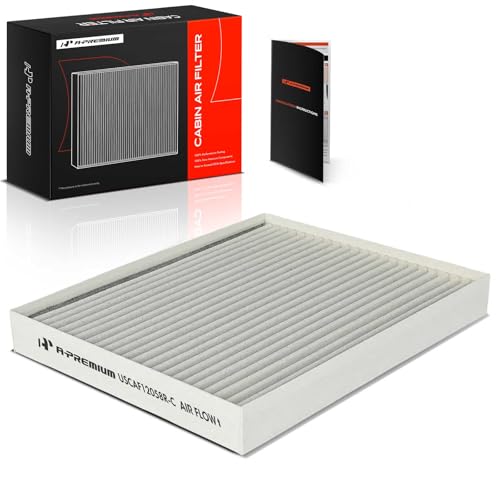
Best for: Hyundai and Kia owners needing annual replacement
This A-Premium cabin filter fits select Hyundai Accent, Elantra, and Elantra GT models, along with Kia Forte, Forte5, and Rio vehicles. It installs behind the glove box and measures 7.68 inches long, 9.37 inches wide, and 1.06 inches high. The box contains one filter, so buyers should compare these dimensions and the listed fitment with their vehicle before ordering.
Its main advantage is the activated carbon layer, paired with multi-layer filter media. That design helps reduce airborne contaminants entering the cabin and may help with some outside odors. The filter matches several reference numbers, including CF12058, PC99239P, 97133-F2000, and F2H79-AK000. At around $10, it offers a low-cost option for routine maintenance. A replacement every 12 months or 12,000 miles is suggested, unless the vehicle maker gives a different schedule. Exact access steps can vary by model.
Pros
- Activated carbon adds another layer beyond basic particle filtration.
- Fits several Hyundai and Kia models from 2017 through 2023.
- Around $10 keeps routine cabin filter changes affordable.
Cons
- One filter comes in the box, so there is no spare for the next service.
- Fitment covers only specific models and years, requiring a careful vehicle check before purchase.
6. PUREFLOW PC99594X Cabin Air Filter

Best for: Hyundai and Kia owners seeking odor control
The PUREFLOW PC99594X is a replacement cabin air filter for select Hyundai, Kia, and Genesis vehicles. Listed applications include the 2022-2026 Hyundai Tucson, 2021-2026 Elantra, 2022-2024 Ioniq 5, Kia EV6, and several other models. The broad compatibility list also includes the Santa Cruz, Kona, Sportage, Sorento, K5, Niro, EV9, and Genesis GV60. Check your vehicle’s year, engine, and existing filter before ordering.
Its main feature is a four-layer filter design. The media targets fine dust, pollen, and road particles before they reach the HVAC system. An activated carbon layer also helps reduce common odors from traffic, exhaust, and outside air. That makes it a practical choice for commuters, city drivers, and households with seasonal pollen concerns. At around $20, it costs less than many dealer-supplied replacements. Still, the listing does not provide a particle-capture rating, filter dimensions, or a recommended replacement interval. Those missing details make direct comparisons harder, especially for buyers seeking a certified high-efficiency filter.
Pros
- Four filtration layers help catch dust, pollen, and road debris.
- Activated carbon helps manage traffic and exhaust odors.
- Fits a wide range of Hyundai, Kia, and Genesis vehicles.
Cons
- The long fitment list requires careful year and engine verification.
- No published filtration rating, dimensions, or replacement schedule is provided.
5. A-Premium Cabin Air Filter

Best for: GM owners replacing cabin filters
The A-Premium cabin air filter is a disposable replacement for many Buick, Cadillac, Chevrolet, and GMC vehicles. It installs behind the glove box and measures about 9.45 inches long by 8.03 inches wide. Height varies slightly, at 1.14 or 1.18 inches, so checking your vehicle’s original filter and reference number is wise. The box includes one filter, with fitment covering model years from 2013 through 2024, depending on the vehicle.
Its main advantage is broad GM coverage in one low-cost part, priced around $10. Activated carbon is built into the filter media, which may help reduce some outside odors as air passes through the cabin system. It fits cars, SUVs, pickups, and EVs, including the Bolt EV, Silverado, Equinox, Tahoe, and Sierra. The filter is not washable or reusable, so it belongs on a normal replacement schedule. Compatibility still depends on the exact year and trim.
Pros
- Activated carbon may help reduce some outside odors.
- Broad fitment covers many GM cars, SUVs, trucks, and EVs.
- Standard dimensions and reference numbers simplify compatibility checks.
Cons
- Only one filter comes in the box.
- It is disposable, not washable or reusable, so replacement is required.
4. BOSCH 6091C HEPA Cabin Air Filter
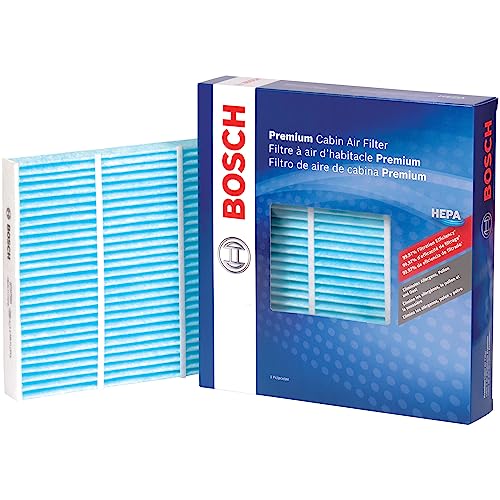
Best for: Drivers seeking cleaner cabin air
The BOSCH 6091C is a HEPA cabin air filter designed to reduce airborne particles inside your vehicle. Its three-layer construction combines dense HEPA media, a melt-blown electrostatic layer, and a static cotton layer. This setup gives the filter more surface capacity while trapping fine debris before it enters the cabin. Structural ribs add support, and the filter comes in blue and white colors. At around $12, it costs little compared with many routine maintenance parts.
A key advantage is the focus on particle capture without a formulated chemical odor neutralizer. That may suit drivers who prefer a simpler filter design, especially families concerned about cabin air quality. Bosch recommends replacement at least every 12 months or 12,000 miles, whichever comes first. Check your vehicle’s required filter number before ordering, since cabin filters are not universal. The filter can reduce particles and some odors carried by the air, but it will not remove a persistent smell caused by spills, mold, or another source inside the vehicle.
Pros
- Three layers combine HEPA media, electrostatic material, and cotton for added filtration capacity.
- Structural ribs help the filter hold its shape during installation and use.
- Around $12, it offers a low-cost annual maintenance option.
Cons
- It does not use a chemical odor neutralizer, so strong cabin smells may remain.
- Replacement fit depends on the vehicle, so buyers must confirm compatibility first.
3. EPAuto CP285 (CF10285) Cabin Air Filter

Best for: Owners of supported Toyota models
The EPAuto CP285, also listed as CF10285, is a replacement cabin air filter for select Toyota, Lexus, Subaru, Jaguar, Land Rover, Scion, Pontiac, and Ford vehicles. It uses activated carbon plus soda in the filter media, a combination intended to freshen air entering the passenger compartment. The maker recommends replacement every 12 months or 12,000 miles, whichever comes first. At around $12, it costs less than many dealer-supplied replacements.
Its biggest strength is broad vehicle coverage. The fitment list includes Toyota models from the 2004 Hilux through newer 2024 4Runner versions, along with Lexus GX460 models through 2023. It also covers vehicles such as the Subaru Outback, Ford Transit, Jaguar F-Pace, and Range Rover. The filter is cross-referenced with FRAM CF10285 and numerous Toyota, Subaru, General Motors, and Jaguar part numbers. That makes it useful for shoppers replacing an existing filter by part number, not just by vehicle name. Still, model-year coverage can vary by trim, engine, or market, so checking the old filter number remains wise.
Pros
- Activated carbon and soda media help freshen cabin air.
- Around $12, it offers a low-cost annual replacement.
- Broad fitment covers many Toyota and Lexus vehicles.
Cons
- Compatibility varies by year and trim, so the vehicle list alone may not confirm fit.
- The supplied details do not include filter dimensions, which makes visual size matching difficult.
2. BOSCH 6092C HEPA Cabin Air Filter
Best for: Drivers seeking high particle filtration
The BOSCH 6092C is a HEPA cabin air filter for select Subaru and Toyota vehicles. Its three-layer design combines dense filter media, a melt-blown electrostatic layer, and a static cotton layer. Bosch rates it to capture 99.97% of particles at 0.3 microns, based on ISO 29463-3:2011. That makes it a strong choice for reducing fine dust and other particles entering through the vehicle’s ventilation system.
Structural ribs help the filter keep its shape during use. The added cotton layer also gives the media more capacity before replacement. Bosch recommends changing the cabin filter at least every 12 months or 12,000 miles. Fitment covers vehicles such as the 2020-21 Subaru Ascent, 2018-21 Crosstrek, 2016-21 Toyota Prius, 2019-20 RAV4, and 2021 Venza. The price is usually around $14, though it changes by seller and vehicle application.
Pros
- Filters 99.97% of 0.3-micron particles under the stated HEPA test standard.
- Three filter layers provide dense media, electrostatic capture, and added capacity.
- Structural ribs support filter stability through its replacement interval.
Cons
- Fitment is limited to specific Subaru and Toyota models, years, and trim levels.
- It does not include a chemical odor neutralizer, so it may not reduce smells as much as an odor-control filter.
1. EPAuto CP134 (CF10134) Cabin Air Filter

Best for: Honda and Acura owners replacing filters
The EPAuto CP134, also listed as CF10134, is a replacement cabin air filter with an activated-carbon layer. It fits a wide range of Honda and Acura vehicles, including Honda Accord models from 2003 through 2022 and Acura MDX models from 2007 through 2020. Coverage also includes the Civic, CR-V, Odyssey, Pilot, Ridgeline, TL, TLX, RDX, and several other models. At around $10, it is a low-cost option for routine filter replacement.
Its main advantage is broad compatibility rather than extra features. The filter matches FRAM CF10134 and several Honda Genuine part numbers, including 80292-SDA-A01, 80292-SHJ-A01, and 80292-TZ5-A41. Its carbon and soda-based filtering material is intended to help freshen air inside the cabin while trapping common airborne debris. Buyers should confirm the exact year and trim before ordering, since some vehicle lines use different filter shapes. The listing does not provide a replacement interval, so owners must follow the vehicle manual or inspect the old filter.
Pros
- Fits many Honda and Acura vehicles across multiple model years.
- Activated carbon and soda material can help reduce cabin odors.
- Around $10, making it affordable for regular maintenance.
Cons
- Compatibility varies by year and trim, so the part number should be checked first.
- No replacement schedule or filter dimensions are provided in the listing.
Buying Guide
Exact vehicle fitment matters most when choosing a premium cabin filter. A filter that matches the factory housing seals properly, while the wrong size can allow unfiltered air around the edges.
- Vehicle compatibility: Match the year, make, model, engine, and OEM part number. Compare the old filter’s dimensions in millimeters, such as 240 × 210 × 30 mm.
- Filter media: Choose a multi-layer filter with synthetic fibers and activated carbon. Carbon helps reduce odors and some exhaust gases, while a particle layer catches dust and pollen.
- Airflow balance: Avoid unusually dense media that makes the fan work harder. The package should identify the application and airflow direction, with an arrow for installation.
- Replacement schedule: Plan to replace it every 12,000 to 15,000 miles or once per year. Change it sooner, around 6,000 to 10,000 miles, if you drive on dirt roads or in heavy traffic.
- Price and packaging: Expect about $15 to $40 for one premium filter. A two-pack can lower the per-filter cost, but confirm both filters fit the same vehicle.
If you cannot have everything, prioritize exact fitment, because strong filtration cannot compensate for a poor seal.
Frequently Asked Questions
How often should you replace a premium cabin air filter?
Replace a premium cabin filter every 12,000 to 15,000 miles, or sooner in dusty conditions. Most automakers publish a specific interval, so check the owner’s manual before choosing a longer schedule. Frequent driving near construction zones or wildfire smoke can load the filter media faster.
What makes a high-quality cabin air filter different?
A premium cabin filter typically combines pleated fiber media with an activated-carbon layer to trap dust, pollen, and some odors. The exact protection depends on filter design and fit. For example, a filter with 20 to 30 pleats may offer more surface area than a thin, flat replacement, but pleat count alone does not prove performance.
Can premium filters improve the air inside my car?
Yes, a premium cabin filter can reduce airborne dust, pollen, and some exhaust odors, but it cannot remove every pollutant. Activated carbon helps with gases and smells, while pleated media captures particles. Replacement intervals often fall near 12,000 to 15,000 miles, though heavy traffic or smoke may shorten that span.
Are premium cabin filters worth the higher price?
They can be worth the higher price if you drive in traffic, carry allergy-sensitive passengers, or want better odor control. A carbon-loaded model may cost more than a basic particulate filter, so compare replacement prices and the vehicle’s service interval before buying. Some cars also need filter changes twice yearly.
Conclusion
The EPAuto CP134 (CF10134) Cabin Air Filter remains the top recommendation for drivers who want a practical, low-cost replacement with broad everyday appeal, especially owners who value straightforward fitment and routine cabin-air maintenance over premium extras. If your priority is stronger odor reduction, choose an activated-carbon alternative instead, since its added filtration layer may handle smoke, road fumes, and musty smells better than a basic particulate filter. Before buying, double-check the filter’s dimensions, your vehicle’s year, make, model, and trim, the package quantity, and the current price, since listings can change and one vehicle may use different filter sizes. Check the old filter number too, rather than relying only on a general model match.