
AGS Automotive Solutions SIL-Glyde Silicone Brake Grease is the best grease for brake calipers and the top pick for most buyers because its silicone formula works well around both metal hardware and rubber parts. It suits caliper slide pins, bushings, and boots, where lubricant must support movement without damaging common brake-system materials. Confirm the label’s temperature guidance before using it in a demanding setup.
This guide is for DIY mechanics, commuters, and anyone replacing pads or servicing caliper hardware. The key factors are material compatibility, operating temperature, and package size. A small tube may cover one repair, while a larger tub fits repeated maintenance. The 7 picks below are ranked with clear reasons and honest drawbacks for each, helping you match the grease to your vehicle, service schedule, and budget.
Quick Comparison
| # | Product | Best For | Price | |
|---|---|---|---|---|
| 1 | AGS Automotive Solutions SIL-Glyde Silicone Brake Grease | Best for silicone grease buyers | ~$10 | View → |
| 2 | Permatex 24125 Ceramic Brake Parts Lubricant | Best for ceramic lubricant shoppers | ~$17 | View → |
| 3 | Keze Ceramic Brake Caliper Grease | Best for caliper maintenance beginners | ~$17 | View → |
| 4 | BTAS Brake Grease, Caliper Sliding Pin & Pad Lubricant | Best for sliding pin servicing | ~$9 | View → |
| 5 | AGS SIL-Glyde Silicone Brake Lubricant | Best for brake noise prevention | ~$9 | View → |
| 6 | BTAS Ceramic Brake Caliper Grease | Best for high-temperature brake work | ~$10 | View → |
| 7 | Keze Ceramic Brake Grease Lubricant | Best for DIY brake repairs | ~$9 | View → |
7 Top Greases for Brake Calipers
We’ve ranked these caliper greases by formula, fit, and value, counting down to the top pick.
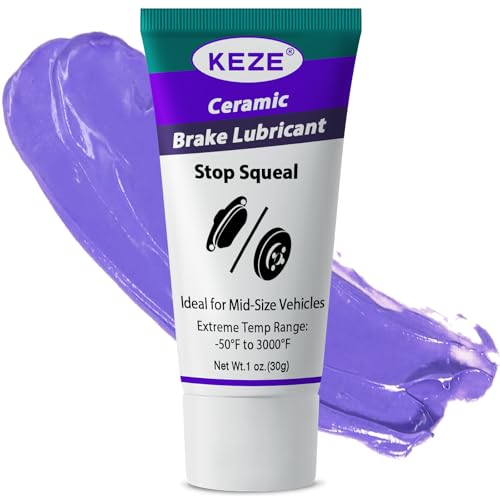
7. Keze Ceramic Brake Grease Lubricant
Best for: DIY brake hardware maintenance
Keze is a purple ceramic brake lubricant sold in a 1-ounce, single-pack tube. It targets caliper slide pins, pad contact points, shims, sleeves, bolts, and other brake hardware that can bind or squeak. The formula combines synthetic MCA with ceramic powder, according to the listing. Its thick texture is meant to stay in place instead of running off quickly. At around $9, it costs little, but the small tube suits one or two jobs better than repeated shop use.
The main draw is its claimed resistance to temperatures up to 3,000°F. That rating sounds useful around hot calipers, but it is a manufacturer claim, not an independent test result. The grease also aims to block moisture, dirt, and rust around exposed hardware. Its purple color can make coverage easier to see during assembly. Still, brake lubricant needs careful placement. Keep it off rotor faces and the friction side of pads. It can help with noise and seized pins, but it cannot fix worn pads, damaged boots, or a sticking caliper.
Pros
- Ceramic powder and synthetic MCA target high-heat brake hardware.
- Thick purple grease helps cover slide pins and shims evenly.
- Lubrication may reduce squeaks, friction, and pin seizure.
Cons
- The 1-ounce tube may run out quickly during several brake jobs.
- The 3,000°F rating is not independently verified in the supplied information.
6. BTAS Ceramic Brake Caliper Grease

Best for: DIY brake maintenance and caliper service
BTAS High Temp Ceramic Brake Caliper Grease is made for sliding pins, pad contact points, and other brake assembly areas that need controlled lubrication. The package includes two 1-ounce containers, giving you a small supply for routine brake work. Its synthetic formula is listed as compatible with EPDM and NBR rubber, plus plastic components. The manufacturer rates it for temperatures up to 3,000°F.
The ceramic-based formula targets friction between brake pads and caliper brackets. It may help reduce squeal, vibration, rust, and sticking when applied in a thin, even layer. The grease can also help limit premature wear on contact surfaces, though brake noise often has several causes. At around $10, the two-pack is reasonably priced for occasional repairs. Apply it only to the areas specified in your vehicle’s service instructions, and do not mix it with another grease.
Pros
- High-temperature rating up to 3,000°F suits demanding brake environments.
- Synthetic formula works with EPDM and NBR rubber, as well as plastics.
- Ceramic solids help reduce friction, vibration, squeal, and contact-point corrosion.
Cons
- Two 1-ounce containers provide limited volume for repeated shop or fleet work.
- The grease does not fix worn guide pins, damaged boots, warped parts, or other mechanical causes of brake noise.
5. AGS SIL-Glyde Silicone Brake Lubricant

Best for: DIY brake service and squeal control
AGS SIL-Glyde is a 4 oz tube of silicone-based lubricant for disc brake assembly work. It is intended for caliper pins, bushings, seals, and other contact points where compatible lubrication can reduce friction and brake noise. The formula works with plastic plus EPDM and nitrile rubber components, giving it broader use than a general-purpose grease.
Its moisture-resistant formula also helps limit rust and corrosion around treated parts. It remains heat resistant above 425°F, or 218°C, which suits many brake-area applications. The lubricant can help parts move smoothly during assembly and come apart more easily during later service. Around $9, it costs little compared with a full brake repair. Still, the 4 oz tube is a small quantity, so frequent shop use may require several tubes. Apply it carefully, since lubricant must stay away from pad and rotor friction surfaces.
Pros
- Compatible with plastic, EPDM rubber, and nitrile components.
- Resists moisture and temperatures above 425°F.
- Helps reduce contact-point vibration, squeal, rust, and corrosion.
Cons
- A 4 oz tube may run out quickly during repeated brake jobs.
- It cannot correct worn pads, damaged hardware, seized caliper parts, or noise caused by improper installation.
4. BTAS Brake Grease, Caliper Sliding Pin & Pad Lubricant

Best for: DIY brake service and caliper pins
BTAS Brake Grease is a 1-ounce lubricant for brake caliper sliding pins, pad contact points, and related hardware. Its 100% synthetic formula uses nano-solid ceramic particles and additives to reduce friction, wear, vibration, and brake noise. The grease is designed for use around plastic and rubber components, including EPDM and nitrile seals. At around $9, it costs little for a small brake-service kit.
The listed temperature range runs from -40°F to 3,000°F, which covers winter cold and high-heat brake areas on paper. That upper figure is a manufacturer claim, not a guarantee for every vehicle or application. Use only a small amount on the correct metal contact surfaces. Keep it off the rotor and pad friction faces, where grease can reduce braking performance. The 1-ounce tube should suit occasional repairs, but shops or people servicing several vehicles may need more. Proper cleaning and inspection still matter, since grease cannot fix seized pins, damaged boots, or worn hardware.
Pros
- Synthetic formula is designed to work with EPDM and nitrile rubber parts.
- Ceramic-based lubrication helps reduce friction, pin wear, vibration, and squeal.
- Broad stated range of -40°F to 3,000°F suits varied brake temperatures.
Cons
- The 1-ounce quantity is small for repeated repairs or multiple vehicles.
- Its extreme heat rating is a product claim, and correct application still matters more than the number.
3. Keze Ceramic Brake Caliper Grease

Best for: DIY brake caliper maintenance
Keze High Temp Ceramic Brake Caliper Grease is an 8-ounce lubricant for caliper slide pins, bolts, sleeves, shims, and other brake hardware. Its formula combines synthetic MCA with ceramic powder, and the manufacturer rates it for temperatures up to 3,000°F. That rating is far beyond normal road use, but actual performance depends on correct application and surrounding brake conditions. The purple grease comes in a brush-top can, giving you a direct way to coat small parts without squeezing product from a tube.
The thick formula is designed to cling to metal surfaces instead of running away quickly. It can help reduce friction, squeaks, moisture exposure, and corrosion around moving caliper parts. At around $17, the 8-ounce container offers a practical amount for routine brake jobs and future service. The built-in brush may also reduce wasted grease during small repairs. Still, it is a maintenance lubricant, not a replacement for cleaning, inspecting, or replacing worn caliper hardware.
Pros
- 8 ounces provides enough grease for multiple brake service jobs.
- Synthetic MCA and ceramic powder support high-temperature use on caliper hardware.
- Purple, brush-applied grease helps coat pins, sleeves, bolts, and shims neatly.
Cons
- The temperature rating comes from the manufacturer, not an independent test.
- Careful application is required to keep grease off brake pad friction surfaces and rotors.
2. Permatex 24125 Ceramic Brake Parts Lubricant

Best for: Brake hardware and rubber seal lubrication
Permatex 24125 is an 8-ounce, single-pack brake lubricant made for disc brake service. Its 100% synthetic base includes ceramic solids, which help the grease stay in place around caliper hardware, pistons, brushings, rubber sleeves, and seals. Around $17, it costs more than many small packets of basic brake grease, but the larger container may suit regular maintenance or multiple vehicles.
The main advantage is its resistance to moisture, corrosion, and other contaminants. That matters on brake components exposed to road spray and grime. The formula is designed not to wash out easily, while maintaining its lubricating properties across a wider temperature range than ordinary caliper greases. It can also help reduce brake noise when applied to the correct contact points. Still, lubricant cannot repair warped rotors, worn pads, damaged hardware, or sticking caliper parts. Careful application remains necessary, since grease should not reach the pad friction surface or rotor.
Pros
- Ceramic solids support lubrication on caliper hardware, pistons, sleeves, and seals.
- Synthetic formula resists moisture, corrosion, and contaminant washout.
- Wider temperature performance may help control brake squeal in varied conditions.
Cons
- An 8-ounce pack may be more lubricant than needed for one brake job.
- It cannot correct noise or poor braking caused by worn, damaged, or misaligned parts.
1. AGS Automotive Solutions SIL-Glyde Silicone Brake Grease

Best for: DIY brake jobs on daily drivers
AGS SIL-Glyde is a 4-ounce silicone brake grease in a brush-top container. It is intended for brake maintenance tasks such as lubricating caliper slide pins, brake hardware, and other moving parts. The silicone formula is designed to handle high-temperature brake environments while helping parts move smoothly and resist wear.
The brush applicator is the main convenience feature. It can make small, controlled applications easier than using grease from a large tub. The product is also flexible enough for several brake-service uses, including slider pins and selected caliper or pad hardware. At around $10, it offers a low-cost option for occasional home repairs. Still, the product information does not provide a specific temperature rating, service interval, or detailed compatibility chart. That matters for buyers who want precise specifications before working on performance vehicles or unusual brake systems.
Pros
- 4-ounce size suits several brake services without requiring a large shop container.
- Silicone formula is intended for high-temperature brake components.
- Brush-top packaging supports controlled application on pins and hardware.
Cons
- The container may be too small for frequent professional brake work.
- No exact operating-temperature rating or service-life guidance is provided.
Buying Guide
Most important factor is material compatibility. A lubricant that attacks EPDM rubber or swells a slide-pin boot can cause binding, uneven pad wear, and costly repairs, even if its temperature rating looks impressive.
- Rubber and plastic safety: Choose a formula labeled safe for EPDM boots, seals, and nylon bushings. Avoid petroleum grease unless the vehicle or service manual specifically permits it.
- Temperature range: Look for a listed operating range reaching at least 400°F, with a high-temperature limit near 500°F or more for areas close to the caliper. Do not use ordinary chassis grease.
- Correct application: Confirm the label covers caliper slide pins, pad abutment points, or both. Never apply lubricant to pad friction material, rotor faces, or inside a rubber boot unless the instructions allow it.
- Water and corrosion resistance: Pick a water-resistant formula for salted roads, rain, and car washing. A 3- to 8-ounce tube suits one or two brake jobs and limits waste.
- Package and value: A precision nozzle or brush helps control thin coatings. Expect roughly $8 to $20 for a small tube or 3-ounce tub, and verify that the cap seals tightly between uses.
If you cannot have everything, prioritize rubber compatibility, because damaged boots can quickly undermine the brake hardware.
Frequently Asked Questions
How do I choose grease for brake caliper pins?
Choose a high-temperature, rubber-safe silicone lubricant made for caliper slide pins, not ordinary multipurpose grease. Check the label for EPDM compatibility and brake-system use. Apply only a thin film to clean pins, because excess grease can collect grit and restrict movement inside the boot.
What grease is safe for brake caliper slide pins?
Silicone-based brake lubricant labeled safe for EPDM rubber is usually the right choice for caliper slide pins. Those pins move inside rubber boots, so petroleum grease can swell or soften the seal. A small 3- to 5-millimeter dab, spread into a thin coat, is typically enough.
Can I use lithium grease on a brake caliper?
You can use lithium grease only when its label specifically approves brake caliper components and the rubber involved. Standard lithium grease is not a safe default. Check the label for EPDM compatibility and slide-pin use. Chassis lithium grease may attack the boot or migrate when hot. Clean old lubricant before applying a thin layer. Keep it off pads and rotors.
Are ceramic or copper greases better for brake hardware?
Ceramic lubricant is generally the safer choice for modern brake hardware, especially near ABS sensors, while copper grease suits only applications that permit it. Neither product belongs on caliper slide pins unless the label specifically approves that use. For example, apply a thin layer to pad backing plates or metal contact points, and keep it off friction surfaces.
Conclusion
AGS Automotive Solutions SIL-Glyde Silicone Brake Grease is the top pick for drivers who want a versatile, silicone-based lubricant for routine caliper and brake hardware service. If your priority is maximum heat resistance for demanding track use or heavy towing, choose a purpose-built synthetic brake lubricant rated for those temperatures instead. Before buying, double-check the package size, compatibility with rubber boots and sliding-pin materials, included quantity, and current price, since listings can vary widely. Use only a thin film on approved contact points, and keep grease away from friction surfaces, including pads and rotors. A small tube suits occasional repairs, while a larger tub makes more sense for multiple vehicles. The right choice protects moving hardware without risking brake contamination.