
For most buyers, 303 Marine Spray & Rinse Ceramic Sealant is the best marine grade ceramic coating because its spray-on, rinse-off formula makes application quick and simple. It targets boats, personal watercraft, and other marine surfaces with a low-effort process. That makes it a practical top pick for routine protection, especially when you want to spend less time polishing and buffing.
This guide is for boat owners comparing easy-care surface protectants for fiberglass, painted surfaces, metal, and similar materials. The most important factors are surface compatibility and the area each bottle can cover. Application steps also matter, since some formulas require drying or hand buffing. The 5 picks below are ranked with reasons and honest drawbacks for each, so you can match the sealant to your boat, maintenance routine, and budget.
Quick Comparison
| # | Product | Best For | Price | |
|---|---|---|---|---|
| 1 | 303 Marine Spray & Rinse Ceramic Sealant | Quick Saltwater Rinse Protection | ~$18 | View → |
| 2 | Meguiar's M2501 Hybrid Ceramic Surface Sealant | Hybrid Surface Sealant Fans | ~$17 | View → |
| 3 | Boat Juice Protection Boat Ceramic Coating Spray | Boat Juice Spray Users | ~$24 | View → |
| 4 | AquaDoc Boat Ceramic Coating Spray | DIY Boat Coating Projects | ~$34 | View → |
| 5 | WavesRx AquaShield+ Ceramic Spray Coating | Frequent Freshwater Boaters | ~$26 | View → |
5 Top Marine Ceramic Coatings
The list is ranked by durability, saltwater protection, and application ease, counting down to the strongest overall pick.
5. WavesRx AquaShield+ Ceramic Spray Coating

Best for: Boat owners needing quick saltwater protection
WavesRx AquaShield+ is a spray-on ceramic sealant for boats and jet skis. Its formula combines silicon dioxide with Polycharger acrylic polymers to create a slick, water-repelling layer. The coating is designed to reduce buildup from saltwater, grime, and other marine contaminants while limiting UV-related fading and oxidation. It costs around $26, although prices can change.
Application is straightforward, but surface preparation still matters. Spray a small amount onto a cool, clean surface, spread it with one side of a microfiber towel, then buff it off with the dry side. The brand says the finish can last for months, though real durability will depend on washing, sun exposure, and water conditions. Marine Potion says the product is made in Florida and uses a biodegradable, environmentally friendly, non-toxic formula. Those claims may appeal to owners who want a simpler alternative to traditional wax, but this spray will not repair chalking, scratches, or existing oxidation.
Pros
- Helps repel saltwater, dirt, and water spots from marine surfaces.
- SiO2 and acrylic polymers provide a glossy protective layer.
- Spray-and-buff application requires no machine polisher.
Cons
- It needs a cool, clean surface, so heavy cleaning may be required first.
- The stated protection for “months” can vary with sun, washing, and saltwater exposure.
4. AquaDoc Boat Ceramic Coating Spray
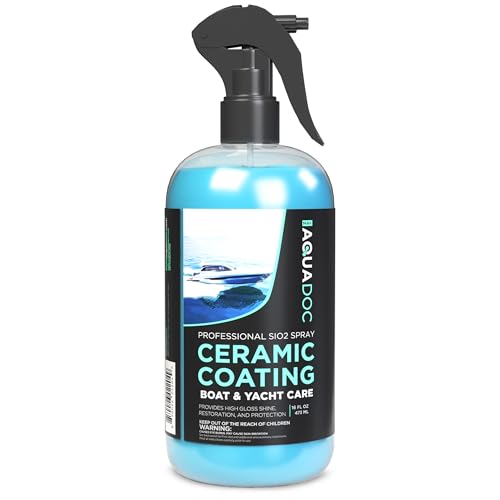
Best for: Boat owners wanting quick spray-on protection
AquaDoc Boat Ceramic Coating Spray is a 16-ounce SiO2-infused sealant for boats, yachts, and personal watercraft. It sprays onto the surface, then buffs with a microfiber towel. The coating is designed to leave a slick, glossy finish while helping guard against UV exposure, water spots, and everyday contaminants. It offers a quicker routine-care option than a traditional wax process.
The main appeal is the water-repellent barrier. It can help water bead away, reduce mineral deposits, and make post-trip cleaning less demanding. The spray also aims to improve surface clarity and restore a brighter shine on fiberglass or other compatible marine surfaces. AquaDoc makes this product in the USA. At around $34, the price sits above some basic boat waxes but may suit owners who prefer spray application and ceramic-style protection. The product details do not state coverage, curing time, or how long the coating lasts.
Pros
- SiO2 formula helps repel water and reduce mineral buildup.
- Spray-and-buff application avoids a longer paste-wax process.
- Designed for boats, yachts, and personal watercraft exposed to sun and water.
Cons
- The 16-ounce bottle may provide limited coverage on larger boats, and no coverage estimate is listed.
- It requires a microfiber towel for buffing, while the product details do not provide a stated protection lifespan.
3. Boat Juice Protection Boat Ceramic Coating Spray

Best for: quick upkeep on gelcoat and trim
Boat Juice Protection Boat Ceramic Coating is a 16-ounce spray designed for routine marine detailing. Its formula uses SiO2, a ceramic ingredient that leaves a slick, water-repelling layer on the surface. The spray is intended to help guard against UV exposure, oxidation, and fading. It works on gelcoat, chrome, glass, vinyl, and plastic, so one bottle can cover more than the hull.
The application is simple: spray it on, then wipe it off with a clean towel. That makes it more practical for quick dockside touch-ups than a multi-step wax routine. The finish should look glossy, while the hydrophobic surface can help water and grime release more easily during later washes. Its Very Cherry scent is another difference from strong vinegar-based marine cleaners. At around $24, it costs more than basic spray wax but stays under $25. The product is made in the USA, though the listing does not give a specific protection period or coverage estimate.
Pros
- SiO2-based protection helps add water repellency and surface slickness.
- Suitable for gelcoat, chrome, glass, vinyl, and plastic.
- Spray-on, wipe-off use saves time during regular boat care.
Cons
- A 16-ounce bottle may not last long on a large boat or multiple watercraft.
- It cannot replace oxidation removal, paint correction, or thorough surface cleaning before application.
2. Meguiar’s M2501 Hybrid Ceramic Surface Sealant

Best for: Boat and RV owners seeking simple protection
Meguiar’s M2501 is a 32-ounce spray sealant made for marine and RV surfaces. Its hybrid ceramic formula works on fiberglass and gel coat, but it is also listed as safe for paint, metal, vinyl, and glass. Apply it by spraying, spreading, and wiping. Use it as the main protectant, a maintenance booster, or a drying aid after washing. At around $17, the bottle offers an affordable option for large vehicles and boats.
The main draw is the balance between broad surface compatibility and a quick application process. It is designed to increase water beading, surface slickness, gloss, and resistance to UV damage. Those effects can help water run off faster and reduce drying effort. A small amount should cover each section, so avoid soaking the panel. Too much product can leave streaks or smears, which adds cleanup work. Meguiar’s long automotive history may add confidence, but the formula still needs careful application for clean results.
Pros
- Works on fiberglass, gel coat, paint, metal, vinyl, and glass.
- Spray-and-wipe use suits boats, RVs, and routine maintenance.
- Water beading and slickness can simplify washing and drying.
Cons
- Excess product may cause streaking or smearing.
- The 32-ounce bottle may not cover very large boats or RVs in one application.
1. 303 Marine Spray & Rinse Ceramic Sealant

Best for: Quick protection on marine surfaces
303 Marine Spray & Rinse Ceramic Sealant comes in a 32-ounce bottle and uses SiO2 technology to add a water-repelling layer. It works on wet surfaces, then activates when you rinse with water. The process skips hand waxing and buffing, which makes it practical for routine boat care. It is designed for non-porous materials such as gel coat, fiberglass, aluminum, and stainless steel.
The main draw is the short application process. Spray the sealant over a wet surface, rinse it right away, and dry the area to reveal a slick, glossy finish. The coating helps repel water, dirt, and other contaminants while reducing the effects of UV exposure, saltwater, and freshwater use. The brand claims protection for up to six months, though heavy marine exposure may shorten that period. At around $18, the bottle offers a relatively low-cost way to refresh shine between more involved detailing sessions.
Pros
- Applies without buffing or hand waxing, saving time during boat maintenance.
- Works across gel coat, fiberglass, aluminum, and stainless steel.
- Helps repel water and dirt while providing UV and marine-exposure protection.
Cons
- The surface must stay wet during application, then be rinsed and dried promptly.
- “Up to six months” is the maximum claim, so frequent saltwater or sun exposure may reduce its useful life.
Buying Guide
The most important factor is compatibility with your boat’s surface and existing finish. A coating made for gelcoat may not bond properly to painted aluminum, vinyl, or antifouling paint, so verify the approved substrates before buying.
- Surface compatibility: Choose a formula labeled for gelcoat, fiberglass, painted metal, or the exact material you need. Avoid automotive clear-coat products on underwater hull paint.
- Saltwater and UV resistance: Look for explicit marine or saltwater testing, plus UV protection. A stated service life of 6 to 24 months is more useful than vague “long-lasting” claims.
- Coverage: Compare the kit’s rated area with your hull size. A 30 mL bottle may cover about 100 to 300 square feet, depending on surface condition and application thickness.
- Cure requirements: Check the full cure time, not just the dry time. Many coatings need 12 to 48 hours without water, rain, or dew, with temperatures above 50°F.
- Preparation and cost: Budget for panel wipe, microfiber towels, gloves, and surface correction. A $50 to $150 kit may cost less than a cheaper product that fails over oxidation.
If you must compromise, prioritize proven surface compatibility and the required cure window.
Frequently Asked Questions
How does marine-grade ceramic coating protect a boat?
A marine-grade ceramic coating protects paint and gelcoat from UV exposure, salt residue, water spots, and light chemical staining, but it cannot repair oxidation or prevent scratches from impacts. Most formulas also create a water-repellent surface, which can make routine washing easier. Many products need 24 to 48 hours to cure.
What should you look for in a boat ceramic coating?
A suitable boat ceramic coating should list its surface compatibility, preparation steps, cure time, durability claim, and resistance to saltwater and UV exposure. Check whether it works on gelcoat, painted fiberglass, metal, or plastic. Some labels specify protection for one to five years, but maintenance and sunlight can shorten that period.
Can ceramic coating be applied to an older boat?
Yes, ceramic coating can be applied to an older boat after removing oxidation, stains, wax, and surface contamination. The coating seals the existing finish, so it will not hide faded gelcoat or deep scratches. Heavy oxidation may require compound or polish first, followed by a complete panel wipe before application.
Are marine ceramic coatings worth the cost?
Marine ceramic coatings can be worth the cost for owners who want easier cleaning and added UV and saltwater protection, but they are not essential for every boat. A professionally applied finish may cost several hundred dollars, while regular washing and affordable spray products can provide simpler, shorter-term protection.
Conclusion
303 Marine Spray & Rinse Ceramic Sealant is the strongest fit for boat owners who want quick application, simple rinsing, and added protection without a lengthy multi-step process. If your priority is the longest service life rather than easy maintenance, choose a wipe-on marine ceramic coating kit instead, since it usually requires more preparation but can create a harder, longer-lasting layer. Before buying, double-check the bottle size, surface compatibility, coverage quantity, and current price, because similar-looking formulas may suit fiberglass, gelcoat, painted surfaces, or metal differently. Also confirm whether the product needs a clean, dry surface or separate polishing first. That small check can prevent wasted product and poor bonding.