
K-Seal ST5501 Coolant Leak Repair, 8 oz is the top pick for most buyers and the best coolant stop leak for a simple, pour-in repair. Its 8-ounce bottle offers a practical amount for many cooling systems without requiring special tools or a complicated process. It is designed for radiator, hose, gasket, and heater-core leaks, but it cannot fix every failure.
This guide is for drivers who need a temporary or lower-cost way to address a small coolant leak before paying for major repairs. The key factors include vehicle compatibility, leak location, leak severity, and bottle capacity. A sealant may help with minor leaks, but cracked parts or severe overheating call for mechanical service. The 6 picks below are ranked with clear reasons and honest drawbacks for each, so you can compare these cooling-system repair products with realistic expectations.
Quick Comparison
| # | Product | Best For | Price | |
|---|---|---|---|---|
| 1 | K-Seal ST5501 Coolant Leak Repair, 8 oz | Quick DIY Coolant Leak Repairs | ~$12 | View → |
| 2 | K-Seal ST5516 Coolant Leak Repair | Larger Cooling System Applications | ~$20 | View → |
| 3 | Bar's Leaks Radiator Stop Leak | Budget Radiator Leak Prevention | ~$9 | View → |
| 4 | Liqui Moly 20132 Radiator Stop Leak | European Vehicle Cooling Systems | ~$12 | View → |
| 5 | Bar's Leaks 1109 Liquid Copper Block Seal | Head Gasket Leak Sealing | ~$8 | View → |
| 6 | Bar's Leaks 1150 Cooling System Repair | Comprehensive Cooling System Repairs | ~$10 | View → |
6 Top Coolant Stop-Leak Picks
These coolant sealers are ranked by formula, compatibility, and ease of use, counting down to the strongest overall pick.
6. Bar’s Leaks 1150 Cooling System Repair

Best for: Older cars with minor coolant leaks
Bar’s Leaks 1150 is a cooling-system repair additive for vehicles with age-related coolant leaks. The 16.9-ounce bottle is sized for a single repair job, though the correct amount depends on the vehicle and its cooling-system capacity. It is designed to work with common antifreeze types, including conventional green or blue coolant and extended-life red, orange, or yellow OAT and HOAT formulas.
The standout feature is its carbon fiber-based formulation, which targets leaks while providing longer-lasting protection than a basic stop-leak product. It can be useful for drivers who want a low-cost repair step before paying for cooling-system parts or labor. The product is made in the United States and typically costs around $10. That price makes it inexpensive to keep in a garage or roadside kit. Still, this type of additive is better suited to minor leaks. A cracked radiator, damaged hose, failed water pump, or leaking head gasket usually needs mechanical repair instead.
Pros
- Works with green, blue, red, orange, and yellow antifreeze types.
- Carbon fiber formulation is intended to provide extended leak protection.
- A 16.9-ounce bottle costs around $10, making it a low-cost repair option.
Cons
- It may not repair major leaks or failed cooling-system components.
- Results can vary based on the leak’s size, location, and the vehicle’s system condition.
5. Bar’s Leaks 1109 Liquid Copper Block Seal

Best for: Small coolant leaks in older vehicles
Bar’s Leaks 1109 is an 18-ounce bottle of liquid cooling-system sealant. It is designed for cars, trucks, vans, SUVs, and RVs with coolant loss from leaks in plastic, aluminum, or cast-iron components. The formula uses sodium silicate, often called liquid glass, plus fiber additives. These materials move with the coolant and help seal certain leaks in heads, engine blocks, intake manifolds, gaskets, freeze plugs, heater cores, and radiators.
The main convenience is the direct-pour application. Add the treatment to the radiator, and no coolant draining is required when used as directed. It works with traditional and extended-life coolants, including green, yellow, orange, pink, red, blue, and purple formulas. It also suits silicate and non-silicate OAT or HOAT coolant, along with water. At around $8, one bottle costs little compared with a repair-shop visit. Still, “permanent” depends on the leak type and correct application. It can help with some cooling-system leaks, but it cannot replace diagnosis when the engine overheats or loses coolant quickly.
Pros
- 18-ounce size provides one treatment for many cars, trucks, vans, SUVs, and RVs.
- Works with antifreeze already in the system, so draining is usually unnecessary.
- Fiber additives and liquid glass target leaks in radiators, gaskets, heater cores, and engine components.
Cons
- It cannot repair every coolant-loss source, such as a damaged hose, water pump, or severe engine failure.
- Correct application matters, and a persistent leak may still require mechanical repair.
4. Liqui Moly 20132 Radiator Stop Leak

Best for: Small cooling-system leaks
Liqui Moly Radiator Stop-Leak is a 250 ml coolant additive for vehicle cooling systems and heating circuits. It is designed to seal leaks in the system and help prevent coolant from entering the combustion chamber, where coolant can cause serious engine damage. The bottle suits systems that use a water filter and those that do not, which gives it broader application than products limited to one setup.
The main appeal is its simple format. You add the measured 250 ml treatment to the cooling system instead of replacing a hose or radiator right away. At around $12, it costs little compared with many cooling-system repairs, though the final price changes by seller. This product may help with a minor leak, but it should not replace proper diagnosis. A leaking water pump, cracked radiator, failed head gasket, or damaged hose needs mechanical repair. Follow the vehicle and product instructions for the correct coolant level and use.
Pros
- 250 ml provides a ready-to-use amount for one cooling-system treatment.
- Works with cooling and heating systems that have water filters or no filters.
- May help seal leaks before coolant reaches the combustion chamber.
Cons
- It is not a dependable fix for large leaks or damaged parts.
- Stop-leak products can complicate later cooling-system service if the underlying fault remains.
3. Bar’s Leaks Radiator Stop Leak
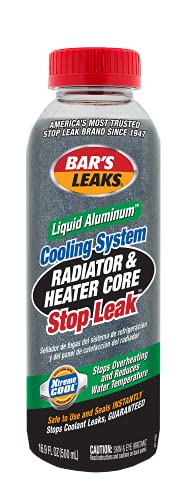
Best for: Quick fixes for small cooling-system leaks
Bar’s Leaks Cooling System Radiator Stop Leak comes in a 16.9-ounce bottle. The liquid aluminum formula is made for several cooling-system problems, including radiator leaks, freeze plug leaks, gasket leaks, and heater core leaks. It may also help lower water temperature when used in the cooling system. That broad coverage makes it more useful than a product aimed only at radiator seepage.
The main appeal is its simple, low-cost approach. At around $9, it costs far less than many mechanical repairs, though results depend on the leak’s location and size. This is a repair additive, not a replacement radiator or gasket. It makes the most sense as a short-term fix, an emergency measure, or a way to delay a larger repair. Buyers should follow the package directions and confirm that the product suits their vehicle before adding it.
Pros
- The 16.9-ounce bottle targets radiator, freeze plug, gasket, and heater core leaks.
- Liquid aluminum can seal some small leaks without replacing a cooling-system part.
- At around $9, it offers a low-cost option before paying for a larger repair.
Cons
- It cannot repair severely damaged radiators, cracked engine parts, or failed components.
- Stop-leak additives may not provide a lasting repair, so recurring leaks still need diagnosis and mechanical service.
2. K-Seal ST5516 Coolant Leak Repair

Best for: Commercial trucks with small coolant leaks
K-Seal ST5516 is a 16-ounce coolant leak repair treatment for water-cooled engines. It uses a one-step application, so you pour it into the cooling system instead of taking the system apart or flushing it first. The formula is made for larger engines, including commercial and agricultural vehicles. It is compatible with all types of antifreeze coolant, which helps simplify use across different vehicles.
The treatment is designed to find and seal holes or cracks in several cooling-system areas. These include the radiator, head gasket, freeze plugs, engine block, heater matrix, and water pump. The manufacturer says it can work within minutes, but results depend on the leak’s size and location. At around $20, the 16-ounce bottle costs far less than many immediate repair jobs. Still, it is best viewed as a repair treatment for manageable leaks, not a replacement for damaged parts or professional service.
Pros
- One-step application requires no cooling-system flush before use.
- Works with all antifreeze coolant types.
- Designed for heavy-duty, commercial, and agricultural engines.
Cons
- May not seal major cracks, severe head-gasket damage, or failing components.
- Applies only to water-cooled engines, so it will not address every type of fluid leak.
1. K-Seal ST5501 Coolant Leak Repair, 8 oz
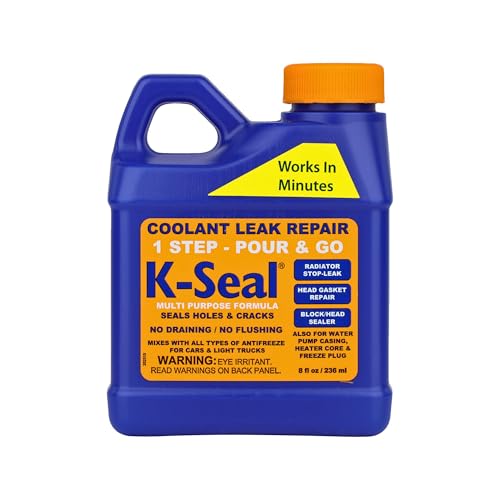
Best for: Drivers seeking a quick minor coolant leak repair
K-Seal ST5501 is an 8-ounce liquid sealant for water-cooled engines. You pour it into the cooling system, then let the formula circulate and target small holes or cracks. It is designed for leaks around radiators, head gaskets, freeze plugs, engine blocks, heater matrices, and water pumps. The maker says it can work within minutes, though results depend on the leak and the vehicle’s condition.
This treatment works with all antifreeze coolant types, so most car and light-truck owners should not need a coolant change first. It suits vehicles with up to 12 cylinders and requires no system flushing after use. At around $12, it costs far less than many mechanical repairs. Still, it should be viewed as a leak-sealing treatment, not a replacement for a damaged component. Bubbles in the radiator or coolant reservoir can point to excess system pressure, which may prevent the product from sealing correctly.
Pros
- The 8-ounce bottle treats compatible cars and light trucks with up to 12 cylinders.
- Works with all antifreeze types and does not require flushing.
- Targets leaks in several areas, including radiators, head gaskets, and heater matrices.
Cons
- Over-pressurized cooling systems may prevent a successful seal.
- It may not fix major cracks, severe gasket damage, or leaks from failed parts.
Buying Guide
Compatibility is the most important factor when choosing a radiator sealant. The wrong formula can react poorly with coolant, aluminum parts, or a manufacturer’s warranty requirements.
- Coolant compatibility: Match the label to your fluid, such as conventional green, OAT, HOAT, or hybrid coolant. Do not mix types unless the vehicle manual permits it.
- Leak size: Use stop-leak only for small seepage or pinhole leaks. A product labeled for radiator, hose-connection, or heater-core leaks is not a fix for a split hose, cracked tank, or overheating engine.
- Application method: Choose a liquid that fits the system’s fill point. Many formulas require a cool engine, the heater set to hot, and 10 to 30 minutes of idling, but follow the package directions.
- System capacity: Check the stated treatment range, often listed for 10 to 16 quarts. One bottle may not cover a large truck or cooling system above that limit.
- Package value: Compare single bottles with two-pack options in the $8 to $20 range. A larger container is not a better buy if the vehicle needs only one treatment.
If you cannot have everything, prioritize exact coolant and vehicle compatibility over price or package size.
Frequently Asked Questions
How does coolant stop leak work?
Coolant stop-leak works by circulating sealing particles or chemicals through the cooling system, where they collect at small leaks and harden with heat. It may help with a minor radiator, heater-core, or hose-joint seep, but it cannot repair a split hose. Use only the amount listed for your system’s coolant capacity.
What type of coolant sealer works best for small leaks?
Liquid formulas are usually the easiest choice for a small, hard-to-find seep, while tablets suit some older systems but dissolve more slowly. Check the label for aluminum, plastic, and coolant compatibility before adding one. For example, a product made for a two-gallon system may be unsuitable for a compact one-gallon cooling system.
Can coolant stop leak fix a head gasket?
Coolant stop-leak usually cannot permanently fix a failed head gasket, warped cylinder head, or cracked engine block. It might slow a very small combustion-gas leak, but bubbling in the reservoir, white exhaust, overheating, or milky oil needs diagnosis. A cooling-system pressure test and combustion-gas test can identify the fault.
Are coolant sealers safe for every vehicle?
These sealers are safe only when the formula matches the vehicle and the cooling system is clean enough for circulation. Some products can restrict a narrow heater-core passage or leave residue after too much product is added. Follow the label exactly, keep the engine cool during filling, and seek mechanical repair if the leak returns.
Conclusion
K-Seal ST5501 Coolant Leak Repair, 8 oz, remains the top pick for drivers who want a simple, affordable option for small cooling-system leaks. If your priority is treating a larger system or keeping extra sealant in the garage, choose a product sold in a bigger bottle, but confirm that it suits your vehicle before use. Before buying, double-check the bottle size, vehicle and coolant compatibility, package quantity, and current price, since listings can change. Remember that stop-leak products are temporary fixes, not replacements for damaged hoses, radiators, water pumps, or head gaskets. Follow the label, monitor the coolant level, and arrange a proper repair if the leak returns or the engine temperature rises.