
Nano Bond 9H PRO Ceramic Coating is the top pick for most buyers and our choice for the best budget ceramic coating. Its main strength is the balance between an accessible price and the added gloss and water resistance drivers want from a paint coating. It is aimed at car owners who want more protection than wax can provide without paying professional-detailing prices.
This guide is for shoppers comparing DIY paint-protection products for cars, trucks, and motorcycles. The key factors are surface preparation, bottle coverage, application time, and curing requirements. A low price matters less if one bottle cannot cover your vehicle or the coating demands difficult prep work. The six picks below are ranked with clear reasons and honest drawbacks for each, so you can choose a formula that fits your vehicle, budget, and detailing experience.
Quick Comparison
| # | Product | Best For | Price | |
|---|---|---|---|---|
| 1 | Nano Bond 9H PRO Ceramic Coating | Long-Term Paint Protection Seekers | ~$38 | View → |
| 2 | CERAKOTE Rapid Ceramic Paint Sealant | Fast Weekend Detailers | ~$20 | View → |
| 3 | Lifeproof Ceramic Coating Spray Kit | First-Time DIY Coating Users | ~$30 | View → |
| 4 | HDFDREO Nano Quick Ceramic Coating | Quick Touch-Up Applications | ~$25 | View → |
| 5 | Griot’s Garage 10978 Ceramic 3-in-1 Wax | Wax Fans Wanting Ceramic Protection | ~$18 | View → |
| 6 | Adam's Advanced Graphene Ceramic Spray Coating Kit | Graphene Coating Upgrade Shoppers | ~$52 | View → |
6 Affordable Ceramic Coatings to Consider
This ranked list counts down from the most practical budget option to our top ceramic coating pick.
6. Adam’s Advanced Graphene Ceramic Spray Coating Kit

Best for: DIY detailers wanting long-term gloss
Adam’s Advanced Graphene Ceramic Spray Coating is a spray-on protectant for cars, boats, RVs, and motorcycles. The formula is marketed as a true graphene oxide ceramic coating, rather than a silica-based spray sealant. It claims protection for 18 months or longer when properly applied. At around $52, it costs more than basic spray waxes but less than many professional coating services.
The coating works on painted panels, wheels, glass, headlights, plastic trim, chrome, unfinished metal, bed liners, tonneau covers, canvas tops, and floor mats. Its UV tracer technology can reveal missed areas under a blue UV light, although the flashlight may need to be purchased separately. Application still requires careful preparation. Clean and dry one panel at a time, then control overspray before moving on. The broad surface compatibility makes it useful for full-vehicle detailing, but the product does not remove the need for paint correction or proper curing conditions.
Pros
- Claims 18+ months of protection, longer than typical spray waxes.
- UV-reactive tracers help reveal missed sections during application.
- Works across paint, glass, wheels, trim, plastics, and metal.
Cons
- A UV flashlight may be required to see the application tracer.
- Panel-by-panel application takes time and demands careful surface preparation.
5. Griot’s Garage 10978 Ceramic 3-in-1 Wax

Best for: Quick protection across exterior surfaces
Griot’s Garage Ceramic 3-in-1 Wax is a 22-ounce SiO2 spray wax for cars, trucks, and RVs. It is designed for painted panels, wheels, plastic, rubber trim, chrome, and other exterior surfaces. The formula adds a water-resistant layer that helps reduce dirt adhesion, sun exposure, oxidation, and water spots.
Application is straightforward: spray the product on, then wipe it off. That makes it more practical than a traditional paste wax for routine maintenance. Its main advantage is surface range. One bottle can add gloss and water beading to several exterior materials instead of just paint. Griot’s Garage says the protection can last for months, though durability depends on surface preparation, weather, and washing habits. At around $18, the 22-ounce bottle also keeps the entry cost moderate for a ceramic spray product.
Pros
- Works on paint, wheels, chrome, plastic, and rubber trim.
- Spray-on and wipe-off application takes less effort than paste wax.
- SiO2 protection helps create water beading and reduce dirt buildup.
Cons
- The surface needs to be clean before application, so it does not replace washing or decontamination.
- Spray wax offers less correction than a polish, and real-world durability can vary with sun, rain, and frequent washing.
4. HDFDREO Nano Quick Ceramic Coating

Best for: DIY owners refreshing daily drivers
HDFDREO Nano Quick Ceramic Coating is a 3.38-fl-oz spray for car care. It combines surface cleaning, claimed minor-scratch and swirl-mark correction, and gloss restoration in one step. The ceramic nano formula is designed for painted panels, glass, and plastic. After spraying onto a clean, dry surface, you buff it with the included automotive sponge. That setup avoids polishing machines and other professional tools.
Its main appeal is convenience. One bottle aims to add water and dust resistance while leaving a smoother, higher-gloss surface. The product also claims resistance to scratches and oxidation, plus a bonded finish that lasts. However, the listing gives no exact protection period or coverage area. At around $25, it costs less than many professional coating services. This spray suits light cosmetic refreshes more than deep paint repair. Marks that reach through the clear coat may remain visible.
Pros
- Combines cleaning, gloss restoration, and minor-mark correction in one spray.
- Works on paint, glass, and plastic surfaces.
- Includes a buffing sponge and needs no specialized equipment.
Cons
- The 3.38-ounce bottle has no stated coverage area, so larger vehicles may require more product.
- It cannot replace proper paint correction for deep scratches, heavy oxidation, or damaged clear coat.
3. Lifeproof Ceramic Coating Spray Kit

Best for: Kitchen and bathroom hard surfaces
Lifeproof Ceramic Coating Spray Kit is a spray-on protective layer for counters, sinks, appliances, tile, glass, and other hard surfaces. It costs around $30, and the kit includes a microfiber towel for buffing. Once applied, the coating aims to reduce fingerprints, water spots, soap scum, mineral residue, and everyday grime for roughly 6 to 12 months.
The main appeal is its broad surface compatibility. It can be used on granite, marble, stainless steel, laminate, porcelain, metal, painted cabinets, stone, and similar materials. Application takes a few steps: clean the surface thoroughly, spray the product, buff it in, then flip the towel to remove residue. Allow one hour before dry use and four hours before contact with water. The coating has passed MTT cytotoxicity testing and can be removed with isopropyl alcohol. Its slick finish is useful around sinks and showers, but that same quality makes it unsuitable for floors.
Pros
- Covers many kitchen and bathroom materials, including granite, glass, tile, metal, and porcelain.
- Helps limit fingerprints, water spots, soap scum, and mineral buildup.
- Offers a six- to 12-month protection period with simple spray application.
Cons
- Surfaces need thorough cleaning first, and the coating requires up to four hours before wet use.
- Do not apply it to floors, since the slick finish can create a slipping hazard.
2. CERAKOTE Rapid Ceramic Paint Sealant
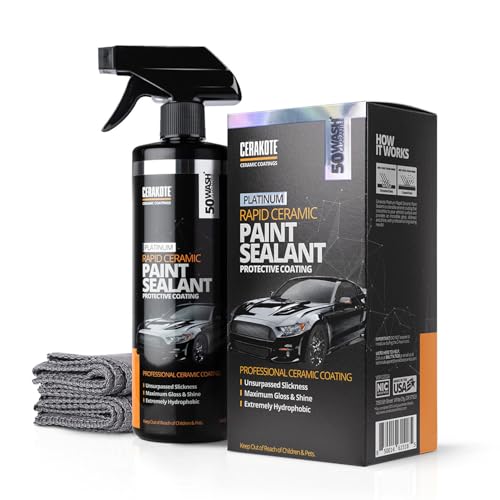
Best for: Drivers wanting quick paint protection
CERAKOTE Rapid Ceramic Paint Sealant is a 14-ounce spray sealant for exterior painted surfaces. It can work alone after a wash or add a slick, glossy layer over existing protection. The formula targets a mirror-like finish and strong water beading, but it does not correct scratches, oxidation, or swirl marks. Paint must already be clean and dry, so preparation still matters.
Its main advantage is a claimed 50-wash durability rating, giving it a longer service window than many basic spray waxes. Application is simple but requires attention: spray a thin, even coat on one panel, then buff it right away. The product works with clear coats and all paint colors. It can also be used on trucks, SUVs, RVs, boats, and motorcycles. At around $20, the 14-ounce bottle offers an affordable route to slicker paint and faster rinsing, though results depend on application and paint condition.
Pros
- Provides a glossy, water-repellent finish with a rated 50-wash lifespan.
- Works as either a standalone sealant or a topper over existing protection.
- Covers many vehicle types and is safe for clear coats and all paint colors.
Cons
- It will not remove scratches, swirl marks, oxidation, or other paint defects.
- Panel-by-panel spraying and immediate buffing take more care than a basic spray wax.
1. Nano Bond 9H PRO Ceramic Coating

Best for: DIY owners of small cars
Nano Bond Ceramic Coating is a 30ml paint protectant with a listed 80% SiO2 formula and 9H PRO rating. It is designed to bond with automotive surfaces, creating a water-repellent layer that helps reduce contact with road salt, grime, UV exposure, and acid rain. The kit includes a dual-sided sponge, microfiber cloth, suede applicator, and protective gloves, so buyers do not need to purchase basic application supplies separately.
The product claims protection for up to 36 months, though real durability depends on surface preparation, weather, washing habits, and application quality. Its broad surface compatibility is useful. The coating can go on painted panels, glass, wheels, and plastic trim. Water beading may also reduce the effort needed during routine washes. At around $38, it costs more than a bottle of wax but includes more durable coating materials. The 30ml size is aimed at a small car or hatchback, not several large vehicles.
Pros
- 80% SiO2 formula is designed to provide longer-lasting protection than ordinary wax.
- Hydrophobic behavior helps water, dirt, and salt move off treated surfaces.
- Kit includes four useful application items, including gloves and a suede applicator.
Cons
- The 30ml bottle may not cover a large SUV, truck, or multiple vehicles.
- The advertised 36-month lifespan is not guaranteed and requires careful preparation and maintenance.
Buying Guide
Preparation requirements matter most because ceramic coatings cannot hide oxidation, swirl marks, or leftover oils. A product with clear surface-prep steps usually gives more reliable results than a cheaper formula with bold durability claims.
- Surface preparation: Plan for 2–4 hours to wash, clay, polish, and wipe the paint with an alcohol-based panel prep. Apply only to clean, dry panels.
- Durability claim: Look for realistic protection periods of 6–24 months. Treat claims beyond 3 years cautiously unless the brand explains maintenance, climate, and application conditions.
- Application window: Check the required temperature, humidity, and flash time. A beginner-friendly formula may allow 2–5 minutes before leveling, while fast-curing products can leave high spots.
- Bottle size and coverage: A 30–50 mL bottle often covers one average-sized car with one coat. Confirm the stated coverage before comparing prices.
- Included supplies: Prefer kits with at least two applicator blocks, several suede cloths, gloves, and clear instructions. A kit priced around $30–$70 can cost less than buying supplies separately.
If you cannot have everything, prioritize easy application and clear flash-time instructions over the longest advertised lifespan.
Frequently Asked Questions
How long does a budget ceramic coating last?
A budget ceramic coating typically lasts one to three years when applied to clean, prepared paint and maintained with pH-neutral soap. Many entry-level products advertise two years, but harsh weather, automatic brushes, and poor surface preparation can shorten that period. Check the label for cure times and maintenance rules.
What does a low-cost ceramic paint coating do?
The main benefit of a low-cost ceramic paint sealant is added water beading and a harder-to-clean surface, not full scratch protection. A typical product uses SiO2-based chemistry and may make washing easier for several months. It will not stop stone chips, deep scratches, or careless washing damage.
Can budget ceramic coatings be applied at home?
Yes, most budget ceramic coatings can be applied at home if the paint is washed, decontaminated, and polished as needed. Work indoors or in shade, keep the panel between 60 and 80°F, and wipe residue within the product’s stated window. Dust, sun, or delayed removal can leave high spots.
Are cheap ceramic coatings worth buying?
They can be worth buying for drivers who want easier washing and short-term gloss without paying for professional installation. A $20 to $50 bottle may cover one midsize vehicle, but coverage varies by formula and application thickness. Choose clear instructions, realistic durability claims, and enough product for your vehicle.
Conclusion
Nano Bond 9H PRO Ceramic Coating is the top pick for car owners who want a straightforward DIY finish at a lower upfront cost. If your priority is easier application rather than maximum protection, choose a simpler spray-on ceramic product that requires less prep and curing time. Before buying, double-check the bottle size, paint compatibility, included quantity, and current price, since package details can change. Any ceramic finish still needs clean, decontaminated paint for reliable results. Plan time for washing, drying, polishing, and curing before driving the vehicle. A smaller bottle may cover one car, but larger vehicles or multiple coats can require more product. Read the label closely and follow its application limits.