
Bar’s Leaks Radiator Stop Leak is the best coolant stop leak for diesel for most buyers because its liquid formula offers a simple, low-cost way to address small cooling-system leaks. It provides a quick alternative to replacing parts when the damage is limited.
This guide is for diesel owners comparing sealants before choosing a bottle. The key checks are compatibility with your antifreeze and cooling-system materials, plus the product’s capacity and the size of the leak it claims to handle. A stop-leak treatment cannot repair a split hose, failed water pump, or badly damaged radiator. The five picks below are ranked with clear reasons and honest drawbacks for each.
Quick Comparison
| # | Product | Best For | Price | |
|---|---|---|---|---|
| 1 | Bar's Leaks Radiator Stop Leak | Older radiators with small leaks | ~$9 | View → |
| 2 | Bar's Leaks HG-1 Head Gasket Repair | Suspected head-gasket seepage | ~$33 | View → |
| 3 | Bar's Leaks 1109 Liquid Copper Block Seal | Metal block leak repairs | ~$8 | View → |
| 4 | Bar's Leaks 1150 Cooling System Repair | Multi-symptom cooling system leaks | ~$10 | View → |
| 5 | Lucas Oil 10279 Engine Oil Stop Leak | Engines with oil seepage | ~$28 | View → |
5 Top Diesel Coolant Sealers
These diesel coolant sealers are ranked by formula, compatibility, and repair scope, counting down to the top pick.
5. Lucas Oil 10279 Engine Oil Stop Leak
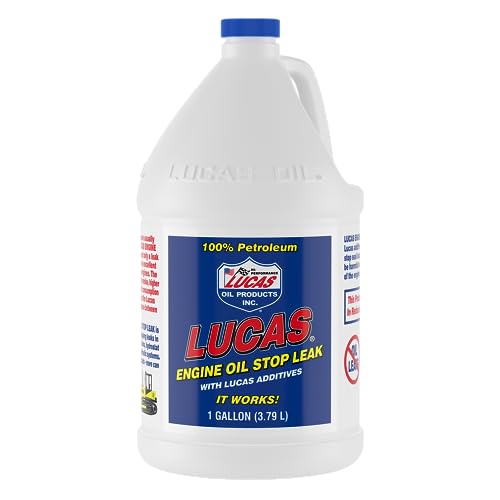
Best for: High-mileage vehicles with minor leaks
Lucas Oil 10279 Engine Oil Stop Leak is a motor-oil additive sold in a one-gallon container. It works with petroleum, semi-synthetic, and full synthetic oils, so it fits many common oil-change setups. The formula contains no harmful solvents, which may appeal to owners who want a less aggressive seal treatment. At around $28, the gallon size offers a low cost per ounce, but it may be more product than one car needs.
The main benefit is its focus on worn seals rather than simply thickening the oil. Lucas says the formula can renew those seals without causing damage or later corrosion. It may also reduce engine noise and oil consumption while helping raise oil pressure. Those claims matter most on older engines with minor seepage or signs of wear. Still, a stop-leak additive cannot repair a cracked housing, failed gasket, or serious mechanical fault. Buyers should treat it as a maintenance aid, not a replacement for diagnosis and repair.
Pros
- Works with petroleum, semi-synthetic, and full synthetic motor oils.
- One-gallon size suits garages that service several vehicles.
- Solvent-free formula is intended to renew worn seals without corrosion.
Cons
- A full gallon may be excessive for a single vehicle or occasional use.
- It may not stop leaks caused by broken parts, major gasket failure, or damaged engine components.
4. Bar’s Leaks 1150 Cooling System Repair

Best for: Sealing minor leaks in older cars
Bar’s Leaks 1150 High Mileage Cooling System Repair is a coolant-system leak sealer for drivers who notice a small loss of antifreeze and want a low-cost first step before replacing parts. This one-pack bottle contains 16.9 ounces, enough for one treatment, though the correct amount depends on the vehicle maker’s instructions and cooling-system capacity. It targets cooling-system leaks rather than acting as a general maintenance additive. At around $10, it costs far less than many mechanical repairs. It should not replace a proper diagnosis if coolant loss continues.
Its broad coolant compatibility is the strongest practical feature. The formula works with conventional green or blue antifreeze, plus extended-life red, orange, or yellow OAT and HOAT coolants. That can make it useful across older and newer vehicles. Bar’s Leaks describes this version as a carbon fiber formulation made for extended protection. The product is manufactured in the United States. Coolant color alone does not confirm chemistry, so check the vehicle manual before mixing fluids or adding a sealer.
Pros
- 16.9-ounce bottle provides a ready-to-use, single-pack treatment.
- Compatible with conventional and extended-life coolant types.
- Carbon fiber formulation is designed for extended protection.
Cons
- It cannot repair major damage, such as a cracked radiator or failed hose.
- Continued coolant loss still requires professional diagnosis and mechanical repair.
3. Bar’s Leaks 1109 Liquid Copper Block Seal

Best for: Small coolant leaks in older vehicles
Bar’s Leaks 1109 Liquid Copper Block Seal is an 18-ounce, one-pack coolant leak treatment. It is made for cars, trucks, vans, SUVs, and RVs with coolant loss from components such as radiators, heater cores, freeze plugs, gaskets, intake manifolds, heads, and engine blocks. The formula uses sodium silicate, often called liquid glass, along with fiber additives that help form a seal around leak points. It is priced around $8, though costs vary by retailer.
The main convenience is that you can add it directly to the radiator without draining the antifreeze first. It works with traditional and extended-life coolants, including OAT and HOAT formulas, as well as water. The treatment is also intended for plastic, aluminum, and cast iron cooling-system parts. That makes it a practical first step for a minor leak, especially when a full repair is expensive or not immediately possible. Still, it should not replace a damaged hose, cracked radiator, or failed water pump.
Pros
- Works with 50/50 coolant mixtures, water, and common coolant colors.
- No coolant draining is required before adding the treatment.
- The 18-ounce bottle can target leaks in several cooling-system components.
Cons
- It may not repair major cracks, severe leaks, or mechanical failures.
- A successful seal can make later diagnosis harder if the underlying problem returns.
2. Bar’s Leaks HG-1 Head Gasket Repair

Best for: Repairable coolant leaks in older engines
Bar’s Leaks HG-1 is a pour-in treatment for coolant-related head gasket and intake gasket leaks. It is designed for gasoline and diesel engines, including racing applications. The formula uses carbon fibers to help seal warped or cracked cylinder heads and engine blocks. At around $33, it costs far less than many major gasket repairs, though results depend heavily on the condition of the engine.
This repair compound works with water and all common 50-50 antifreeze mixes, including green, blue, yellow, orange, pink, and red coolants. It also supports silicate and non-silicate formulas, such as OAT and HOAT. No coolant flush or thermostat removal is required. The vehicle should idle for 15 minutes without overheating or needing more coolant before using it. That condition makes this product a poor match for severe leaks or engines that quickly lose coolant.
Pros
- Works with gasoline and diesel engines, including racing setups.
- Compatible with multiple coolant colors and OAT or HOAT formulas.
- Requires no coolant flush or thermostat removal before use.
Cons
- The engine must idle for 15 minutes without overheating or adding coolant, which rules out many severe leaks.
- It cannot replace mechanical gasket or engine repairs when damage is extensive.
1. Bar’s Leaks Radiator Stop Leak
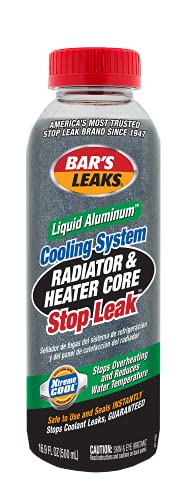
Best for: Drivers with small cooling-system leaks
Bar’s Leaks Cooling System Radiator Stop Leak is a liquid aluminum sealant for leaking cooling systems. The 16.9-ounce bottle targets leaks in radiators, freeze plugs, gaskets, and heater cores. It is poured into the cooling system rather than applied directly to one damaged spot. At around $9, it offers a low-cost option before paying for a radiator or cooling-system repair.
Its broad coverage makes it more useful than a product aimed only at radiator leaks. The formula can seal several common leak points, including freeze plugs and engine gaskets. It may also help lower water temperature, according to the listed product claims. Still, this type of additive works best as a temporary repair or first step. It cannot replace a damaged radiator, cracked engine part, or failed hose. A recurring leak may need pressure testing and a permanent repair.
Pros
- Liquid aluminum formula targets leaks inside the cooling system.
- One 16.9-ounce bottle covers radiator, freeze plug, gasket, and heater core leaks.
- Low price makes it a practical first attempt before larger repair costs.
Cons
- It may not stop leaks caused by major cracks or severely damaged parts.
- A successful seal can be temporary, so the cooling system may still need professional repair.
Buying Guide
Most important factor is compatibility with the engine’s cooling system. A formula suited to diesel coolant, metal parts, and the leak type can reduce damage risk. The wrong additive may restrict narrow passages or harm seals.
- Diesel and coolant compatibility: Choose a label that names diesel engines and your coolant type, such as conventional green, OAT, HOAT, or ELC. Avoid products that only list gasoline vehicles.
- Leak size and location: Match the product to a minor seep, radiator pinhole, or small gasket leak. Stop-leak additives will not repair a split hose, cracked tank, or loss of several quarts per hour.
- Formula and solids: Check for fibers, ceramic particles, sodium silicate, or liquid polymers. Avoid sodium-silicate formulas unless the instructions approve your engine, since they may require a heat-curing procedure.
- Application requirements: Confirm the bottle size, dose, and flush steps. A 16-ounce bottle may treat one cooling system, but heavy-duty diesels can hold 4-10 gallons. Follow the capacity chart.
- After-use limits: Look for stated drive time, idle time, and refill intervals. Check return terms and the $10-$30 price range, since this additive is usually a temporary repair.
If you cannot satisfy every factor, prioritize confirmed diesel and coolant compatibility over price or bottle size.
Frequently Asked Questions
How does diesel coolant stop leak work?
Diesel coolant stop-leak products seal small leaks by carrying suspended fibers, minerals, or polymer particles to the opening as coolant circulates. They are meant for minor seepage, not major hose, radiator, freeze-plug, or head-gasket failures. A typical application may treat one cooling system, but the label’s dosage can range from 8 to 16 ounces.
What should I look for in a coolant sealer for diesel engines?
Look for a formula labeled for diesel cooling systems, compatible with your coolant type, and suitable for aluminum and mixed-metal components. Read the container for limits on sealing size and application method before adding it. Some products target slow seepage, while others claim broader use across radiators, heater cores, and engine blocks.
Can coolant sealers damage a diesel engine?
Yes, some coolant sealers can cause problems if they clog narrow passages, heater cores, thermostats, or filters, especially after overdosing. Follow the bottle exactly and drain the cooling system if directed. For example, adding 16 ounces to a system rated for 8 ounces can leave excess solids circulating.
Are coolant stop-leak products a permanent repair?
No, most coolant stop-leak products provide a temporary repair rather than a permanent fix for a diesel cooling-system leak. Their result depends on leak size, pressure, coolant condition, and the damaged part. A small radiator seep may slow for weeks, while a cracked head needs mechanical repair.
Conclusion
Bar’s Leaks Radiator Stop Leak is the top choice for diesel owners who want a simple, budget-friendly option for small radiator or cooling-system leaks. If your priority is handling a larger system or keeping extra product on hand, choose a larger-format, diesel-compatible sealant instead, since one container may not cover the required coolant volume. Before buying, double-check the bottle size, diesel and coolant-system compatibility, recommended quantity for your system, and the current price. Stop-leak products are temporary repairs, not substitutes for replacing a failed hose, cracked tank, damaged radiator, or blown head gasket. Follow the label directions, and repair the underlying fault when possible. A persistent leak can quickly cause overheating and engine damage.