
Whether you’re cruising down the highway or navigating city traffic, a modular helmet with Bluetooth can be the difference between a safe ride and a frustrating one. The right helmet not only protects your head with a sturdy, comfortable shell, but also lets you stay connected—stream music, receive navigation prompts, and answer calls without taking your hands off the handlebars. With so many models flooding the market, choosing the perfect blend of safety, audio quality, battery life, and ease of use can feel overwhelming. In this guide we cut through the hype and review the six top modular helmets equipped with Bluetooth, highlighting what makes each stand out. By the end, you’ll know which helmet fits your style and needs.
6 Must-Have Modular Helmets with Bluetooth – Top Picks
We’ve tested dozens, and these six modular helmets combine premium safety, seamless Bluetooth integration, and rider comfort for any road adventure.
6. Sena OUTRUSH 2 Smart Helmet

The Sena OUTRUSH 2 is a sleek, matte‑black modular helmet that blends high‑tech connectivity with classic rider freedom. Thanks to built‑in Bluetooth, you can pair your smartphone for calls, navigation, or music, while the Mesh Intercom 3.0 lets you chat with up to 16 riders in a group—no extra accessories required. Its WAVE Intercom compatibility means you can link to any brand’s headset, extending communication range as far as your cellular network reaches. Inside, 2nd‑generation high‑definition speakers turn the helmet into a personal sound studio, delivering crystal‑clear music that follows every twist of the road. Intelligent Power Management watches the helmet’s accelerometers and powers down automatically after hours of inactivity, so you never waste battery life. The dual P/J homologation satisfies FMVSS 218, giving you confidence whether the chin bar is up for wind‑in‑your‑face riding or down for full protection.
Pros
- Seamless group communication via Mesh Intercom 3.0 and universal WAVE compatibility.
- Premium audio experience with high‑definition speakers and Bluetooth music streaming.
- Smart battery handling that shuts off the helmet when idle, extending ride‑time between charges.
Cons
- Price point is higher than basic helmets, reflecting its advanced tech.
- Mesh intercom range depends on cellular coverage; remote areas may limit connectivity.
5. ILM 902BT Bluetooth Motorcycle Helmet

The ILM 902BT is a modular flip‑up helmet that blends safety, comfort, and connectivity in a sleek matte‑black package. Its high‑impact ABS shell meets and exceeds FMVSS 218 DOT standards, while the dual‑visor system and replaceable liners keep vision clear and the interior fresh. Integrated air‑ventilation channels prevent fogging, and the removable liners make cleaning a breeze. Bluetooth 3.0 delivers one‑touch control for calls, music, FM radio, and GPS prompts through a built‑in speaker and noise‑canceling microphones. An intercom module lets up to three riders link together, with two‑way conversation possible over 500 m (1,640 ft). A single charge fuels up to 12 h of phone talk, 8 h of intercom use, and 110 h of standby, and the battery auto‑sleeps to preserve life when idle.
- Safety: DOT‑approved ABS shell, dual visor, replaceable liners
- Connectivity: Bluetooth 3.0, built‑in speaker, noise‑canceling mic, FM radio, GPS audio
- Intercom: 3‑rider pairing, 2‑rider simultaneous chat, 500 m range
- Battery: 12 h talk, 8 h intercom, 110 h standby, deep‑sleep mode
- Package: 1 battery, USB cable, user manual, black helmet bag
Pros
- All‑in‑one communication: Calls, music, FM, GPS, and rider‑to‑rider intercom without extra devices.
- Long‑lasting power: Up to 12 hours of talk time and a deep‑sleep mode that extends standby life.
- Comfort‑focused design: Dual visor, ventilation, and removable liners keep the ride cool and clean.
Cons
- Battery wake‑up delay: After deep sleep, the helmet needs about 30 minutes of charging before Bluetooth functions resume.
- Weight: The added electronics and modular mechanism make it slightly heavier than a basic full‑face helmet.
4. ILM 953 Motorcycle Helmet
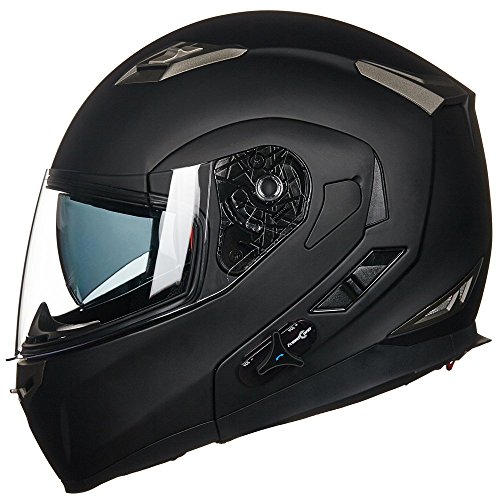
The ILM Bluetooth Integrated Modular Flip‑up Full‑Face Helmet (Model 953) combines cutting‑edge connectivity with uncompromising safety. Its Bluetooth 3.0 module delivers up to 8 hours of talk time and a staggering 110 hours of standby, while a built‑in DSP provides echo cancellation and noise suppression for crystal‑clear voice even at highway speeds. The helmet’s flip‑up design and fully washable microfiber liner keep comfort and convenience front‑and‑center, and the adjustable vents let you fine‑tune airflow on any ride. Because the Bluetooth module adds a little bulk, the helmet runs one size smaller—choose from S (55‑56 cm) to XXL (63‑64 cm) for a snug, aerodynamic fit. Two high‑quality speakers produce full‑stereo sound for music, FM radio, GPS prompts, or intercom chatter, and the intercom can maintain a link up to 1 680 ft between riders. The shell meets or exceeds FMVSS‑218 and DOT safety standards, giving you confidence on the road.
Pros
- All‑in‑one communication: One‑touch control for calls, intercom, music, and navigation without removing the helmet.
- Long‑lasting battery: 8 h talk time + 110 h standby, plus quick 30‑minute wake‑up from deep‑sleep mode.
- Comfort & fit: Washable microfiber lining, adjustable vents, and a size‑down fit that reduces bulk.
Cons
- Size adjustment: The built‑in Bluetooth module forces a smaller fit; riders who prefer a looser helmet may need to size up.
- Battery sleep behavior: If the unit sits unused for an extended period, it may require a brief charge to reactivate Bluetooth.
3. FRBRK Motorcycle Bluetooth Modular Helmet

The FRBRK Motorcycle Bluetooth Modular Helmet blends cutting‑edge safety with modern tech for every rider. Certified to DOT FMVSS‑218 standards, it meets U.S. road‑traffic requirements, giving you confidence that the shell and high‑density EPS foam core will absorb impact when it matters most. The integrated Bluetooth headset delivers crystal‑clear stereo sound, active‑noise‑reduction calls, automatic answering, and song playback—all with ultra‑low power consumption and a signal strong enough for any Bluetooth‑enabled device. A dual‑visor system adds versatility: a sturdy, elastic external sunshade for bright daylight and a flip‑up internal dark shade that shields your eyes without compromising the wide field of view. The composite ABS shell provides durability and stability, while the modular design lets you swap visors quickly for any condition.
Pros
- DOT safety certification ensures legal road use and reliable impact protection.
- Built‑in Bluetooth offers hands‑free communication, music streaming, and noise‑cancelling calls without extra accessories.
- Dual visor system gives instant sun protection and glare reduction while maintaining a broad vision range.
Cons
- The helmet’s advanced electronics may require periodic charging, which could be inconvenient on long trips.
- The modular visor mechanism adds a small amount of extra weight compared with a single‑visor design.
2. ILM 953 Modular Helmet
The ILM Bluetooth Integrated Modular Flip‑up Full‑Face Helmet blends cutting‑edge communication tech with classic safety. Its sleek matte‑black shell houses a Bluetooth 3.0 module that delivers up to 8 hours of talk time and 110 hours of standby on a single charge. The flip‑up sun shield and fully washable microfiber lining keep you comfortable on long rides, while adjustable vents regulate airflow. Because the Bluetooth unit adds a bit of bulk, the helmet runs one size smaller—choose from S (55‑56 cm) up to XXL (63‑64 cm). One‑touch controls let you answer, reject, or redial calls without removing your gloves, and incoming calls automatically pause music, FM radio, or GPS navigation. The intercom works up to 1 680 ft (≈ 512 m) between riders, and two high‑quality built‑in speakers provide full‑stereo sound. The helmet meets or exceeds FMVSS‑218 and DOT safety standards, and DSP echo cancellation with noise suppression ensures crystal‑clear voice transmission even at high speeds.
Pros
- All‑in‑one connectivity – Bluetooth calling, music, FM, GPS, and a 1 680 ft intercom range in a single helmet.
- Comfort & convenience – Washable microfiber liner, adjustable vents, and a flip‑up sun shield for all‑weather riding.
- Safety‑first design – DOT‑approved shell with DSP echo cancellation and noise suppression for clear communication.
Cons
- Battery deep‑sleep – If unused for an extended period, the battery may enter deep‑sleep mode, requiring a short charge to reactivate.
- One‑size‑smaller fit – Riders need to size down compared to standard helmets, which may require careful measurement before purchase.
1. Sena Outrush R Bluetooth Helmet

The Sena Outrush R Bluetooth Modular Motorcycle Helmet blends high‑performance safety with cutting‑edge connectivity. Its modular shell lets you flip up the front half for easy access, while a retractable sun visor drops down on the fly to cut glare on bright roads. Integrated speakers and a discreet microphone are built into the liner, and a three‑button control on the left side lets you manage calls, music, and navigation without taking your hands off the handlebars. Powered by Bluetooth 5.0, the 4‑way intercom links up to three riders for crystal‑clear group chats, and the 2‑way HD intercom delivers low‑latency, high‑definition voice transmission for solo rides. DOT certification and compliance with FMVSS 218 guarantee that safety isn’t compromised. Pairing is a breeze with the Smart Intercom Pairing feature—just scan the QR code in the Sena Utility App and the helmet syncs instantly with your phone or other Sena devices.
Pros
- Modular design & retractable visor – convenient for quick entry, exit, and sun protection.
- Advanced Bluetooth 5.0 intercom – 4‑way group chat and 2‑way HD calls with low latency.
- Easy QR‑code pairing – eliminates fiddling with menus; connect in seconds.
Cons
- Battery life may be limited during extended multi‑day trips; a spare charge may be needed.
- Larger footprint compared to non‑modular helmets, which could affect aerodynamics for some riders.
Buying Guide
When buying a modular helmet with Bluetooth, safety certification and reliable audio integration are essential. A good helmet also balances comfort, durability, and price for everyday riding.
- Safety certifications – Ensure DOT, ECE or Snell approval and a solid impact rating.
- Bluetooth quality – Look for Bluetooth 4.0+ with clear sound, easy pairing, and waterproof controls.
- Fit and ventilation – Adjustable straps, ample airflow, and a lightweight shell reduce fatigue.
- Hinge durability – Choose stainless‑steel or reinforced polymer hinges that stay smooth over time.
- Value and reviews – Compare price with features and check recent rider feedback for reliability.
By weighing safety, connectivity, comfort, build quality, and cost, you can select a modular Bluetooth helmet that enhances both protection and riding enjoyment. A thoughtful choice will serve you reliably for many miles to come.
Frequently Asked Questions
What features should I look for in the best modular helmet with Bluetooth?
- Integrated Bluetooth system: Built‑in speakers, microphone, and a reliable wireless module (usually 2.4 GHz) that pairs easily with smartphones or GPS units.
- Safety certifications: Look for DOT, ECE, or Snell approval to ensure the helmet meets impact standards.
- Modular convenience: A sturdy hinge and quick‑release chin bar that stays secure in both open and closed positions.
- Battery life & charging: At least 8‑10 hours of continuous use and a USB‑C charging port for fast top‑ups.
- Audio quality: Clear, noise‑cancelling mic and balanced sound with volume control on the helmet.
- Comfort: Removable, washable liner, adequate ventilation, and an adjustable fit system.
Which modular helmets currently rank highest for Bluetooth performance and overall value?
| Helmet | Bluetooth System | Battery Life | Safety Rating | Notable Extras |
|---|---|---|---|---|
| Shoei Neotec II | Shoei’s proprietary 2‑way Bluetooth (compatible with most devices) | 10 hrs (talk) / 12 hrs (music) | DOT, ECE | Adjustable ventilation, removable liner |
| Schuberth C4 Pro | Integrated Bluetooth with noise‑cancelling mic, voice‑control | 12 hrs (talk) | DOT, ECE | Anti‑fog visor, optional GPS module |
| HJC RPHA 70 ST | Bluetooth-ready (via external module) | 8 hrs (talk) | DOT, ECE | Lightweight carbon‑fiber shell, aerodynamic design |
These three models consistently receive high marks for audio clarity, ease of pairing, and reliable safety performance while staying within a reasonable price range.
How do I properly install and maintain the Bluetooth system in a modular helmet?
-
Installation
- Follow the manufacturer’s step‑by‑step guide; most helmets come with pre‑wired speakers and a mic that snap into designated ports.
- Pair the helmet with your device before the first ride: enable Bluetooth, select the helmet’s name, and confirm any PIN (usually “0000”).
-
Maintenance
- Cleaning: Wipe the exterior and speaker grills with a damp cloth; avoid submerging any electronic components.
- Battery care: Charge the helmet after each ride or at least once a week; store it in a cool, dry place to prolong battery life.
- Firmware updates: Some helmets offer app‑based updates—install them periodically to improve connectivity and fix bugs.
-
Troubleshooting
- If pairing fails, reset the Bluetooth module (usually a small reset button inside the ear cavity) and restart your phone or GPS device.
- Check for interference from other 2.4 GHz devices; moving away from Wi‑Fi routers or other helmets can help.
Proper installation and regular care keep the Bluetooth system functional and ensure the helmet remains safe and comfortable for every ride.
Conclusion
Choosing the right modular helmet with Bluetooth hinges on balancing safety, comfort, and connectivity. Prioritize helmets that meet rigorous impact standards while offering a secure, adjustable fit, ensuring you stay protected on every ride. Seamless audio integration—clear sound, reliable microphone performance, and intuitive controls—enhances communication without compromising focus. Look for long‑lasting battery life and easy charging solutions to keep you powered through extended trips. Comfort features such as ventilation, lightweight materials, and ergonomic padding are essential for reducing fatigue on longer journeys. Ultimately, a well‑designed modular helmet should blend robust protection with effortless, high‑quality wireless communication, delivering a smoother, safer riding experience.