
The Everlit Survival Car Emergency Kit is the best portable car emergency kit for most buyers. Its broad mix of roadside tools, first-aid supplies, and survival gear gives drivers one practical package for common breakdowns and minor emergencies. It is built as a ready-to-store vehicle kit, rather than a single-purpose tool, so it can cover more situations without requiring several separate purchases.
This guide is for drivers who want dependable backup supplies in the trunk. The key factors are total contents, case size, tool materials, and how quickly you can reach essential items. A larger kit may include more gear, but it can take up valuable storage space or bury small supplies. The seven picks below are ranked by coverage, portability, and value, with clear reasons and honest drawbacks for each. Use the list to match your vehicle, driving habits, and storage limits.
Quick Comparison
| # | Product | Best For | Price | |
|---|---|---|---|---|
| 1 | Everlit Survival Car Emergency Kit | Drivers Preparing for Winter Breakdowns | ~$70 | View → |
| 2 | AUTODECO Car Roadside Emergency Kit | Families Building a Roadside Safety Kit | ~$18 | View → |
| 3 | Car Emergency Kit with Air Compressor and First Aid Kit | Road Trippers Needing First Aid Supplies | ~$64 | View → |
| 4 | Car Emergency Kit with Portable Air Compressor | Commuters Handling Flat Tires | ~$100 | View → |
| 5 | Jump Starter with Air Compressor | Drivers With Dead Car Batteries | ~$150 | View → |
| 6 | VCANENERGY Jump Starter with Air Compressor | SUV Owners Needing Extra Starting Power | ~$100 | View → |
| 7 | Mini First Aid Kit with Hard Shell Case | Travelers Carrying Compact Medical Supplies | ~$9 | View → |
7 Portable Car Emergency Kits Worth Buying
These seven kits are ranked by emergency coverage, size, and value, counting down to the top pick.
7. Mini First Aid Kit with Hard Shell Case

Best for: Compact car and travel storage
This 150-piece first aid kit packs common emergency supplies into a small 6.4-by-4.9-by-2.7-inch case. The 0.73-pound kit includes bandages, gloves, povidone-iodine prep pads, metal tweezers, a tourniquet, and other basic items. At around $9, it offers an inexpensive way to keep supplies in a car, desk, backpack, or suitcase.
The hard EVA shell gives the case more protection than a soft pouch, while its smooth PU surface wipes clean. It is water resistant for light exposure, but the instructions say not to soak it. Inside, separate sleeves group the contents, which should make small items easier to locate during a stressful moment. Premium zippers and included carabiners add practical storage options for hiking, camping, boating, or road trips. Still, this is a compact kit, so it cannot carry the same reserve supplies as a larger household model.
Pros
- Compact and light: Measures 6.4 by 4.9 by 2.7 inches and weighs 0.73 pounds.
- Useful mix of supplies: Includes 150 pieces, gloves, tweezers, prep pads, bandages, and a tourniquet.
- Organized hard case: Separate inner sleeves help keep supplies sorted and the EVA shell protects the contents.
Cons
- Not fully waterproof: The case handles light moisture but should not be soaked.
- Limited for major emergencies: Its small size restricts supply quantities, and the tourniquet requires proper training.
6. VCANENERGY Jump Starter with Air Compressor

Best for: Drivers building a compact roadside kit
This VCANENERGY unit combines a portable jump starter, tire inflator, and roadside supplies in one rugged case. Its 8,000mAh battery supports emergency starts for gasoline engines up to 3.5 liters, plus motorcycles, boats, ATVs, tractors, lawnmowers, and snowmobiles. Heavy-duty clamps include spark-proof and reverse-polarity protection. A bright LED light can help with nighttime roadside work.
The built-in compressor reaches 150 PSI and has a digital display for tire pressure and battery status. It can handle car tires, bicycles, motorcycles, balls, and other inflatables, though the listing does not provide an inflation time. USB-C handles recharging, while USB-A lets the pack charge phones and other devices. The case also includes tire repair tools, a first-aid kit, tow rope, flashlight, ice scraper, reflective vest, raincoat, emergency blanket, safety hammer, and gloves. At around $100, it costs more than a basic jump pack, but includes far more roadside equipment.
Pros
- Combines battery boosting and tire inflation in one unit.
- 150 PSI compressor includes a real-time digital pressure display.
- Includes useful safety gear, repair tools, and weather supplies.
Cons
- The 3.5-liter gasoline rating may not cover larger trucks or SUVs.
- The listing gives no compressor run time, inflation speed, or recharge duration.
5. Jump Starter with Air Compressor

Best for: Drivers building a full roadside kit
This portable emergency kit combines a jump starter, tire inflator, power bank, and roadside tools in one rugged case. Its 12,000mAh battery supports gasoline engines up to 6 liters, including cars, motorcycles, boats, ATVs, tractors, lawnmowers, and snowmobiles. Heavy-duty clamps include spark-proof and reverse-polarity protection. A bright LED light can help with nighttime repairs or roadside visibility.
The built-in compressor reaches a claimed 150 PSI and has a digital display for tire pressure and battery level. It can also inflate bicycle tires, sports balls, and other inflatables. USB-C handles recharging, while USB-A lets the unit charge phones and tablets. The wider kit includes a tire repair set, first aid supplies, tow rope, hand tools, safety vest, emergency blanket, snow brush, ice scraper, and safety hammer. At around $150, it costs more than a basic jump pack, but includes more emergency gear in one purchase.
Pros
- Combines battery boosting and tire inflation in one device.
- Includes several roadside tools, first aid supplies, and visibility gear.
- USB-A output can recharge phones and other small devices.
Cons
- The kit may take noticeable trunk space because it includes many separate tools.
- The listing rates the starter for gasoline engines up to 6 liters, with no diesel capacity stated.
4. Car Emergency Kit with Portable Air Compressor

Best for: Prepared family road trips
This roadside kit combines tire, starting, towing, visibility, and first-aid supplies in one trunk-ready package. It includes a portable air compressor, a seven-piece tire repair set, 12-foot jumper cables, a tow rope, reflective vest, warning triangle, safety hammer, gloves, poncho, and a basic first-aid pack. At around $100, it costs more than a small tire inflator or simple roadside pouch, but it covers more emergency needs.
The 8-gauge jumper cables carry a listed 300 amps and use PVC insulation designed to resist freezing, cracking, and tangling. Their four large clamps should grip common battery terminals securely. The 55-piece first-aid kit contains bandages, wound dressings, cleansing wipes, scissors, safety pins, a PBT bandage, and a foil blanket. That makes it useful for minor cuts during road trips or at home. The kit is positioned as lightweight and compact, although the listing does not provide its packed dimensions or total weight.
Pros
- Combines an air compressor, tire repair tools, jumper cables, tow rope, and visibility gear in one kit.
- Twelve-foot, 8-gauge cables offer useful reach around larger cars and trucks.
- A 55-piece first-aid pack includes wound-care supplies, scissors, and a foil blanket.
Cons
- The listing does not state the compressor’s inflation speed, battery type, maximum pressure, or power source.
- The tow rope’s weight rating is not provided, so buyers cannot confirm whether it suits heavier trucks.
3. Car Emergency Kit with Air Compressor and First Aid Kit

Best for: New drivers building a trunk kit
This 112-piece roadside emergency kit combines basic breakdown gear in one portable case. It includes a portable air compressor for adding air to a low tire, heavy-duty jumper cables for a dead battery, a first aid kit, and a reflective safety triangle. The compact, lightweight format should fit in most trunks without taking much room. At around $64, it costs more than a small tire repair kit, but covers more situations.
Its broad mix makes it useful for daily commuting, teen drivers, and longer trips. The compressor can help with a low tire, but it is not a replacement for a spare tire or professional roadside service. The triangle adds visibility when a car stops on the shoulder, while the first aid supplies cover minor injuries. Seasonal use is another advantage, since battery trouble, tire pressure loss, and poor visibility can happen in summer or winter. Still, the listing does not provide compressor speed, cable length, case dimensions, or a full breakdown of the 112 pieces. Buyers should confirm those details before purchase.
Pros
- Includes a portable air compressor for roadside tire inflation.
- Heavy-duty jumper cables help with dead-battery situations.
- A reflective triangle and first aid kit cover visibility and minor injuries.
Cons
- The listing does not specify compressor speed, power requirements, or cable length.
- It cannot replace a spare tire, tire jack, or professional roadside assistance.
2. AUTODECO Car Roadside Emergency Kit

Best for: drivers building a first-car kit
The AUTODECO Car Roadside Emergency Kit is a compact collection of roadside supplies packed in an organizer bag. It is made for storage on a backseat or in a trunk, so the items stay together instead of spreading across the vehicle. The kit suits daily commuting, winter travel, and longer road trips. At around $18, it offers a low-cost way to add basic emergency gear to a car, especially for a teenager getting a first vehicle.
The included cable uses a PVC outer covering and copper wire inside. The listing says this universal cable is intended for small vehicles, so buyers with larger cars, SUVs, or trucks should check compatibility before relying on it. The portable format is the main strength here. It takes less planning to keep one bag in the car, and the black case should blend into most interiors. It also makes a practical gift for new drivers or family members. However, the available details do not provide the bag’s dimensions, a complete itemized contents list, or performance ratings for the cable. Those gaps make it difficult to judge how much backup equipment the kit truly provides.
Pros
- Organizer bag keeps emergency supplies together in a trunk or backseat.
- PVC-covered, copper-wire cable is specified for small vehicles.
- Around $18 makes it an affordable gift for new drivers.
Cons
- The cable may not suit SUVs, trucks, or other larger vehicles.
- The listing does not clearly state every included item, bag size, or cable rating.
1. Everlit Survival Car Emergency Kit
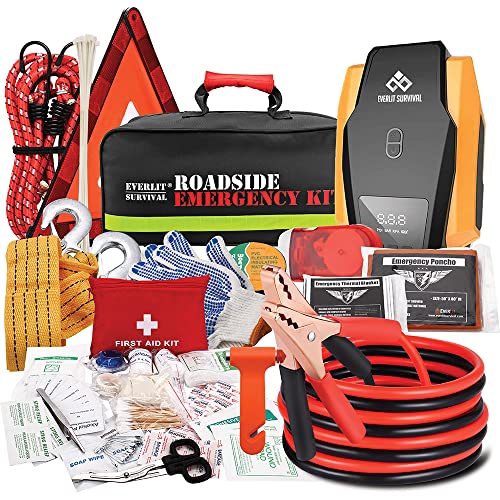
Best for: Drivers building a trunk emergency kit
The Everlit Survival Car Emergency Kit combines roadside tools, tire support, jump-start equipment, and basic medical supplies in one portable package. It includes a 12-volt digital air compressor, 12-foot jumper cables, a tow strap, gloves, flashlight, warning triangle, rain poncho, space blanket, glass breaker, and seatbelt cutter. At around $70, it costs more than a basic tire or jumper kit, but it covers more roadside problems in one purchase.
The tire inflator has preset pressure controls and automatic shutoff, so you can set the target before starting. Its built-in light may help during nighttime use, and three nozzle attachments support inflatables beyond vehicle tires. The 8-gauge, copper-clad aluminum cables provide 300 amps and reach across a typical vehicle gap. The 108-piece first-aid kit covers small cuts, blisters, stings, and basic wound care. Everlit also includes a 60-day return period and a one-year satisfaction warranty.
Pros
- Covers several emergencies with jump cables, a tow strap, inflator, safety tools, and first-aid supplies.
- The 12-foot jumper cables can reach batteries with less repositioning.
- Automatic shutoff helps prevent overinflating a tire after setting the target pressure.
Cons
- Copper-clad aluminum cables are generally less conductive than solid copper cables, especially for demanding starts.
- The kit may take noticeable trunk space, and the included tools are basic rather than replacements for full-size roadside equipment.
Buying Guide
The most important factor is whether the contents fit your car and driving risks. A compact roadside kit helps only when it includes the right tools for a dead battery, flat tire, poor visibility, or minor injury.
- Jump-start capacity: Choose a starter rated for at least 400 to 600 peak amps for most four-cylinder cars. Larger engines may need 1,000 peak amps or more.
- Essential tools: Look for 10- to 12-foot jumper cables, a tire-pressure gauge, work gloves, a tow strap, pliers, screwdrivers, and a tire plug kit.
- Lighting and visibility: Pick a flashlight rated around 200 lumens with at least six hours of runtime. Add two reflective warning triangles and a high-visibility vest.
- Kit size and weight: A case around 12 by 8 by 6 inches and under 10 pounds fits many trunks without taking much cargo space.
- Storage life and price: Expect to pay $50 to $150 for a useful kit. Choose sealed supplies, a jump pack with a charge indicator, and first-aid items with expiration dates.
If you cannot get everything, prioritize jump-start power and reliable warning equipment.
Frequently Asked Questions
How do I choose a portable car emergency kit?
Choose a portable car emergency kit by checking its safety contents, storage size, weather rating, and replacement dates. A useful option includes jumper cables, a flashlight, first-aid supplies, reflective markers, gloves, and a phone charger. Check that the bag fits under a seat and that batteries are fresh.
What should a roadside emergency kit include?
A roadside emergency kit should include jumper cables, a warning triangle, flashlight, batteries, first-aid supplies, work gloves, tire pressure gauge, and basic tools. Add a reflective vest, blanket, drinking water, and shelf-stable snacks for longer delays. Look for at least 10 core items in a durable, organized bag.
Can a small car emergency kit handle common breakdowns?
Yes, a compact roadside kit can help with common problems, but it cannot replace professional towing or medical care. Choose one with supplies for flat tires, dead batteries, minor cuts, and poor visibility. A 12-volt air compressor or lithium jump starter adds useful support, but each requires regular charging.
Are portable vehicle emergency kits worth buying for everyday drivers?
Yes, these kits are worth buying if you drive in remote areas, face winter weather, or want supplies ready during a breakdown. A basic bag often costs less than buying each item separately and can remain in your trunk for 6 to 12 months before you check expiration dates.
Conclusion
Everlit Survival Car Emergency Kit is the top pick for drivers who want a broad set of roadside supplies in one ready-to-store package. If your priority is saving trunk space, choose a smaller compact kit instead, even if it includes fewer tools and first-aid items. Before buying, double-check the bag’s size, compatibility with your vehicle and tire equipment, included quantities, and current price, since listings and bundles can change. Keep the kit where you can reach it quickly, not under loose cargo or buried beneath luggage. Review the contents twice a year, replace expired medical supplies, and add personal items such as water, gloves, or medication when needed. A roadside kit supports preparation, but it cannot replace safe driving or roadside assistance.