
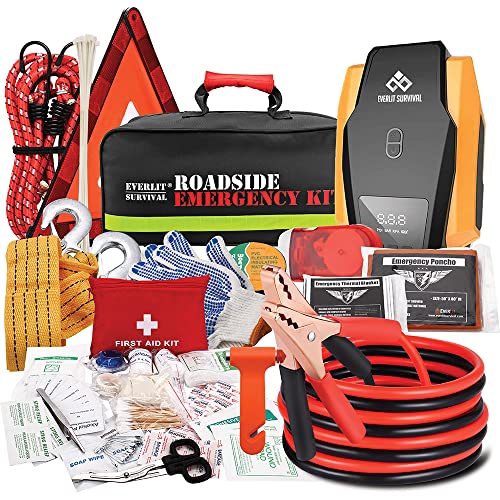
The Everlit Survival Car Emergency Kit is the best premium car emergency kit for most buyers because it combines roadside tools and first-aid supplies in one organized package. It fits drivers who want one grab-and-go option for flat tires, dead batteries, minor injuries, and unexpected roadside delays. Its broad mix of supplies makes it more useful than a small first-aid pouch while staying focused on common car problems.
This guide is for commuters, families, new drivers, and anyone who spends time on rural roads. Focus on case size, tool materials, supply count, and access under stress. Bigger kits cover more emergencies but use more trunk space. The five picks below are ranked with reasons and honest drawbacks for each, so you can match the gear to your vehicle and budget.
Quick Comparison
| # | Product | Best For | Price | |
|---|---|---|---|---|
| 1 | Everlit Survival Car Emergency Kit | Preparedness-Minded Everyday Drivers | ~$70 | View → |
| 2 | Jump Starter with Air Compressor | Dead-Battery Emergency Planners | ~$150 | View → |
| 3 | Car Emergency Safety Kit Bag with Air Compressor and Jumper Cables | Long-Distance Family Road Trippers | ~$110 | View → |
| 4 | Emergency Roadside Kit for Car | Budget-Conscious Commuters | ~$40 | View → |
| 5 | AUTODECO Car Roadside Emergency Kit | New Drivers Building Confidence | ~$25 | View → |
5 Premium Car Emergency Kits Worth Considering
These picks are ranked by coverage, build quality, and roadside usefulness, counting down to the strongest overall choice.
5. AUTODECO Car Roadside Emergency Kit

Best for: Drivers building a basic roadside kit
The AUTODECO Premium Emergency Kit combines several roadside essentials in one zippered storage bag. It includes jumper cables, a tow rope, reflective vest, safety hammer, emergency blanket, survival whistle, and a first-aid kit. The set measures 14 x 6.4 x 8.7 inches and weighs about 3.6 pounds, so it should fit in a trunk, back seat, or spare-tire compartment. At under $25, it offers a practical starting point for everyday commuting and road trips.
Its strongest feature is the broad mix of supplies. The jumper cables address dead batteries, while the tow rope may help with a minor breakdown when another vehicle can provide assistance. The reflective vest and whistle can improve visibility and signaling, especially after dark or in poor weather. Still, the listing does not provide the cable length, tow-rope load rating, or details about the first-aid contents. Those missing specifications matter when an emergency involves a larger vehicle or serious damage.
Pros
- Packs battery, visibility, signaling, and first-aid supplies together.
- Compact 14 x 6.4 x 8.7-inch bag fits many storage areas.
- Weighs about 3.6 pounds and costs under $25.
Cons
- The jumper-cable length and wire specifications are not listed.
- The tow-rope rating and first-aid kit contents remain unclear.
4. Emergency Roadside Kit for Car

Best for: Drivers building a compact emergency kit
This 142-piece roadside kit packs basic breakdown and safety gear into a small plastic case. It includes 8.2-foot jumper cables, a towing rope, snow shovel, flashing lights, reflective warning triangles, raincoats, life blankets, a compass, and more. The case has separate spaces for repair tools such as pliers, three screwdrivers, a utility knife, tape measure, PVC tape, and a digital test pen. At around $40, it covers more situations than a small jumper-only pouch.
The jumper cables have UL certification and four large alligator clips with insulated rubber-covered grips. Their PVC outer surface is designed to resist freezing, cracking, and tangling. The escape tool combines a high-carbon steel hammer with a pointed and flat end, plus seat-belt cutters. Reflective clothing can make roadside work easier for other drivers to spot. Its compact shape should fit a trunk, back seat, or spare-tire compartment, although the full 142-piece count may leave the case crowded.
Pros
- 8.2-foot jumper cables give more reach between vehicles.
- Reflective triangles, flashing lights, raincoats, and safety clothing support roadside visibility.
- The tool case organizes pliers, screwdrivers, tape, and a utility knife in separate spaces.
Cons
- The kit does not list jumper-cable gauge or vehicle-size limits, so heavy-duty compatibility is unclear.
- Many small items increase the piece count but may not replace a full repair kit or dedicated medical supplies.
3. Car Emergency Safety Kit Bag with Air Compressor and Jumper Cables

Best for: Drivers building a trunk safety kit
This roadside kit combines basic car tools, tire inflation equipment, first aid supplies, and winter accessories in one storage bag. It includes 170 items, including 12-foot, 8-gauge jumper cables, a digital 12V air compressor, a 22-piece vehicle tool set, and a two-in-one snow brush and ice scraper. The bag is intended for trunk storage, so drivers can keep several emergency essentials together instead of collecting them separately.
The strongest feature is the preset tire inflator. Plug it into the vehicle’s 12V outlet, choose the desired PSI, and it shuts off automatically after reaching that setting. An LED light supports nighttime use, while three nozzles handle items such as balls and air beds. The 138-piece first aid section covers basic wound care with bandages, pads, alcohol-free cleansing wipes, safety pins, metal scissors, an emergency blanket, a tourniquet, and an instruction leaflet. At around $110, it costs more than a simple first aid or jumper-cable set, but it covers more roadside needs in one purchase.
Pros
- Includes long 12-foot jumper cables with 8-gauge wiring.
- Automatic PSI shutoff helps prevent overinflating tires.
- Combines 138 first aid items with 22 car tools.
Cons
- The compressor needs a working 12V outlet, so it cannot inflate a tire if the vehicle has no electrical power.
- The kit includes basic supplies, but drivers may still need separate specialty tools, medications, or larger winter equipment.
2. Jump Starter with Air Compressor

Best for: Drivers wanting one roadside kit
This roadside emergency kit combines a battery booster, tire inflator, power bank, and safety supplies in one rugged case. Its 12,000mAh battery supports gasoline engines up to 6 liters, including cars, motorcycles, boats, ATVs, tractors, and lawnmowers. Heavy-duty clamps include spark-proof, reverse-polarity, over-current, over-voltage, and short-circuit protection. An LED work light adds visibility during nighttime roadside repairs.
The built-in compressor reaches 150 PSI and shows tire pressure and battery status on its display. It can handle car, SUV, light-truck, bicycle, motorcycle, ball, and inflatable needs, though the listing does not provide inflation times. USB-C recharges the unit, while USB-A lets it charge phones and tablets. The case also includes a tire repair kit, first aid kit, tow rope, hand tools, snow brush, ice scraper, safety vest, emergency blanket, and safety hammer. At around $150, it costs more than a basic jump pack, but includes far more emergency gear.
Pros
- Combines jump starting and tire inflation in one portable unit.
- Multiple electrical safety protections reduce common jump-start mistakes.
- Includes useful roadside supplies, from a tow rope to a first aid kit.
Cons
- The listing does not state whether it supports diesel engines or how many jump starts one charge provides.
- A 150 PSI maximum does not reveal actual inflation speed, especially for larger tires.
1. Everlit Survival Car Emergency Kit
Best for: Drivers building a basic roadside kit
The Everlit Survival Car Emergency Kit combines roadside tools, basic medical supplies, and a digital tire inflator in one portable bag. It includes 12-foot, 8-gauge copper-clad aluminum jumper cables rated for 300 amps, a tow strap, safety gloves, a flashlight, warning triangle, rain poncho, space blanket, glass breaker, seatbelt cutter, and smaller repair items.
The 108-piece first aid kit covers common cuts and minor roadside injuries with bandages, wound pads, antiseptic wipes, gloves, tape, a triangular bandage, tweezers, and a CPR mask. The 12-volt compressor connects to a vehicle power outlet and has preset pressure controls with automatic shutoff. Three extra nozzles support inflatables beyond car tires. At around $70, this roadside kit offers more coverage than a tire inflator or jumper cable alone. Its main strength is convenience. One purchase covers several emergency needs, including problems that happen after dark or in bad weather.
Pros
- The 12-foot jumper cables give extra reach between vehicles, while the 8-gauge, 300-amp rating suits many standard cars.
- Automatic shutoff helps prevent overinflation after you set the target pressure.
- The 108-piece medical kit includes useful items such as a CPR mask, triangular bandage, and finger bandages.
Cons
- Copper-clad aluminum cables are generally less conductive than pure copper, so they may be less efficient in demanding jump-start situations.
- The included supplies focus on basic roadside help. Larger vehicles, severe injuries, and major mechanical failures may require separate equipment or professional assistance.
Buying Guide
The most important factor is contents coverage, because a stranded driver may need help with a dead battery, flat tire, injury, or severe weather. A premium roadside kit should solve several problems without forcing you to buy extra gear.
- Roadside tools: Look for 8-gauge jumper cables at least 12 feet long, a tow strap rated for 10,000 pounds, work gloves, tire plugs, and three reflective warning triangles.
- First-aid supplies: Choose at least 100 pieces, including adhesive bandages, sterile gauze, antiseptic wipes, medical tape, scissors, gloves, and a cold pack. Check expiration dates before storing it.
- Power and lighting: A jump starter should provide 1,000 to 2,000 peak amps and include USB charging. Select a flashlight with at least 8 hours of runtime, plus spare batteries.
- Weather protection: Include two emergency blankets, ponchos, hand warmers, drinking water, and shelf-stable food with five-year expiration dates. Add a compact folding shovel for snow-prone areas.
- Case and vehicle fit: A hard-sided case around 16 by 12 by 6 inches protects supplies without consuming the whole trunk. Expect to spend roughly $100 to $250 for a well-equipped set.
If you cannot have everything, prioritize a reliable jump starter and visible roadside warning gear.
Frequently Asked Questions
How do I choose a premium car emergency kit?
Choose a premium car emergency kit with roadside essentials, durable tools, clear instructions, and enough supplies for your climate. Look for a lithium jump starter, tire inflator, reflective gear, first-aid items, gloves, and a flashlight. A practical set should also fit your vehicle’s storage space without blocking access to the spare tire.
What should a high-end roadside kit include?
A high-end roadside kit should include jump-start equipment, tire repair tools, visibility gear, first-aid supplies, water, and basic shelter. Prioritize a 12-volt jump starter, an inflator rated for your tire pressure, a tow strap, work gloves, and two warning triangles. Check expiration dates on medical items and food.
Can a premium vehicle emergency kit replace roadside assistance?
No, a premium vehicle emergency kit cannot replace roadside assistance for major crashes, locked vehicles, deep mechanical failures, or unsafe roadside conditions. It can help with smaller problems, such as a flat tire or weak battery. A jump starter may restart a car, but it cannot repair a failed alternator or damaged tire.
Are expensive car safety kits worth the cost?
Expensive car safety kits are worth the cost when they contain reliable equipment you will use, not filler items or duplicate tools. Higher-priced sets may include a lithium jump pack, air compressor, stronger cables, and better storage. Compare the warranty and battery capacity, since a $200 kit is not automatically better than a $100 one.
Conclusion
Everlit Survival Car Emergency Kit is the top recommendation for drivers who want a broad, ready-to-store emergency setup for commuting, family trips, and unexpected roadside delays, without sorting every basic item separately. If your priority is serious medical coverage rather than general roadside readiness, pick a larger first-aid-focused kit instead, since it may offer more dressings, medication space, protective supplies, and room for personal additions. Before buying, double-check the kit’s packed size against your trunk or cargo area, confirm compatibility with your vehicle and local driving needs, verify the quantity of each critical item, and compare the current price across reliable sellers, since contents, shipping costs, and listings can change over time.