
The Jump Starter with Air Compressor is the top pick for most buyers because it handles two common roadside problems in one compact device. For drivers comparing the best winter car emergency kit, that combination matters: a dead battery or low tire can leave you stranded in freezing weather. This type of portable power pack typically includes booster cables, a 12-volt outlet, work light, and digital tire inflator. Check the listed battery capacity and peak current before buying, since those numbers vary widely.
This guide is for commuters, families, and anyone who parks outdoors during cold months. Focus first on battery capacity and peak starting current, then check the unit’s size, cable length, compressor speed, and cold-weather storage guidance. A bulky model may offer more power but take up valuable trunk space. The six picks below are ranked with clear reasons and honest drawbacks for each, so you can match the device to your vehicle and driving routine.
Quick Comparison
| # | Product | Best For | Price | |
|---|---|---|---|---|
| 1 | Jump Starter with Air Compressor | Drivers Facing Dead Batteries | ~$150 | View → |
| 2 | Everlit Car Emergency Survival Kit | Year-Round Roadside Preparedness | ~$70 | View → |
| 3 | VCANENERGY Car Emergency Kit | Compact Vehicle Safety Needs | ~$60 | View → |
| 4 | Car Emergency Kit with Portable Air Compressor | Drivers With Flat-Tire Concerns | ~$100 | View → |
| 5 | Mylar Emergency Thermal Blankets | Cold-Weather Breakdown Protection | ~$6 | View → |
| 6 | Car Emergency Safety Kit with Portable Air Compressor | Families Planning Long Road Trips | ~$110 | View → |
6 Top Winter Car Emergency Kits
These ranked winter car kits count down to the top pick, with practical options for snow, ice, cold, and roadside delays.
6. Car Emergency Safety Kit with Portable Air Compressor

Best for: Drivers building a trunk safety kit
This roadside kit combines 170 items in one trunk-ready bag. It includes 12-foot, 8-gauge jumper cables, a 12V digital tire inflator, a 138-piece first aid kit, and a 22-piece car tool set. The compressor lets you set a target PSI, then shuts off automatically when it reaches that number. An LED light supports nighttime use, while three nozzle adapters handle balls, air beds, and similar inflatables.
The first aid section covers basic road-trip injuries with bandages, pads, alcohol-free cleansing wipes, safety pins, metal scissors, an emergency blanket, and a tourniquet. A guidance leaflet is also included. For winter driving, the two-in-one snow brush and ice scraper can help clear windows before departure. The kit costs around $110, so it makes the most sense for drivers who want several emergency supplies together instead of buying each item separately. The organized bag should also make trunk storage easier.
Pros
- Includes 12-foot jumper cables with an 8-gauge design for roadside battery assistance.
- Digital inflator uses a set PSI, automatic shutoff, and an LED light.
- Combines 138 first aid items, 22 car tools, and winter accessories.
Cons
- The 12V compressor needs access to the vehicle’s power outlet.
- Many first aid supplies are basic, single-use items, so serious injuries need professional care.
5. Mylar Emergency Thermal Blankets

Best for: Car kits and bug-out bags
This four-pack of emergency blankets uses aluminized Mylar foil to reflect body heat during cold-weather emergencies. Each blanket measures 82 by 52 inches when unfolded, giving one person a basic cover for shelter, rest, or ground protection. The product listing claims the material can retain up to 90% of body heat, though actual warmth depends on wind, moisture, clothing, and proper use. At around $6, the pack offers a low-cost way to place one blanket in several kits.
The main advantage is storage. Each sheet folds into a compact package that fits in a backpack, glove box, camping bin, or disaster kit. The reflective surface may also help rescuers spot someone outdoors. These blankets can support camping, hiking, storm preparation, and first-aid supplies, and the Mylar is described as tear-resistant and reusable. Still, this is a thin emergency layer, not a substitute for an insulated sleeping bag or a weatherproof shelter.
Pros
- Four blankets provide coverage for multiple cars, bags, or household kits.
- Each 82-by-52-inch sheet folds small and adds little bulk.
- Reflective aluminized Mylar can help conserve body heat and improve visibility.
Cons
- Thin foil can puncture or tear on branches, rocks, and sharp edges.
- It provides no cushioning and limited insulation from cold ground or wet weather.
4. Car Emergency Kit with Portable Air Compressor

Best for: Drivers building a winter roadside kit
This roadside emergency kit combines basic recovery, tire, and safety gear in one package. It includes a portable air compressor, a seven-piece tire repair kit, tow rope, work gloves, a reflective vest, warning triangle, safety hammer, poncho, and jumper cables. The 12-foot cables use 8-gauge wire with a 300-amp rating, PVC insulation, and four large alligator clips. That length gives you more flexibility when two vehicles cannot park close together.
The 55-piece first aid kit is another useful inclusion. Its supplies cover minor cuts and scrapes, with bandages, dressings, cleansing wipes, safety pins, scissors, a PBT bandage, and a foil blanket. A guidance leaflet is included, but this remains a basic first aid pack rather than a full medical setup. At around $100, the bundle costs more than a simple jumper-cable kit, yet it covers several roadside needs at once. The product description does not provide the compressor’s inflation speed, maximum pressure, battery type, or power connection, so buyers should check those details before relying on it for a flat tire.
Pros
- Includes 12-foot, 8-gauge jumper cables rated for 300 amps.
- Combines tire repair, towing, visibility, and basic first aid supplies.
- Includes a 55-piece first aid kit with a foil blanket and scissors.
Cons
- The air compressor’s pressure, inflation time, and power source are not specified.
- The kit may take up useful trunk space, and some included tools are basic emergency backups.
3. VCANENERGY Car Emergency Kit

Best for: Drivers facing snowy roadside emergencies
The VCANENERGY car emergency kit combines winter tools, roadside gear, and medical supplies in one trunk-ready bag. It contains 86 pieces, including 12-foot, 8-gauge jumper cables and a 73-item first aid kit. That mix covers common needs after a breakdown, minor injury, or sudden weather change. At around $60, it offers a broad collection without requiring separate purchases for basic supplies.
The detachable snow shovel and snow brush are the main winter-focused features. They can help clear loose snow and ice before driving, while the ice scraper handles smaller frozen areas. Other equipment includes a tire repair kit, tow rope, warning triangle, flashlight, gloves, and a safety hammer. The organized case should make the tools easier to find than loose items in a trunk. Still, shoppers should view it as backup equipment, not a replacement for professional roadside service. Its contents also need periodic checks, since first aid supplies can expire or get used.
Pros
- Includes 12-foot, 8-gauge jumper cables for added reach around a vehicle.
- Combines a 73-item first aid kit with roadside safety tools.
- Detachable shovel, snow brush, and scraper support winter travel.
Cons
- The listing does not provide the jumper cables’ maximum starting capacity or vehicle compatibility.
- The many separate items may require regular inventory checks and trunk space.
2. Everlit Car Emergency Survival Kit
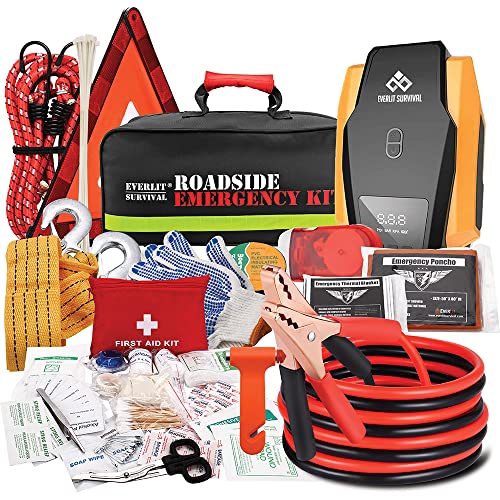
Best for: Drivers building a practical roadside kit
The Everlit Survival Car Emergency Kit combines roadside tools, basic medical supplies, and a 12-volt tire inflator in one portable bag. It includes 12-foot, 8-gauge copper-clad aluminum jumper cables rated for 300 amps, a tow strap, safety gloves, a flashlight, warning triangle, rain poncho, space blanket, glass breaker, and seatbelt cutter. At around $70, it costs more than a basic first aid or tire kit, but covers more roadside situations.
The 108-piece first aid kit adds bandages, wound pads, alcohol wipes, gloves, tape, tweezers, a triangular bandage, and a CPR mask. The digital compressor lets you preset tire pressure, then stops automatically at that level. It also has an LED light and three extra nozzles for inflatables. The kit comes from a veteran-owned company with a 60-day return period and a one-year satisfaction warranty. Still, this is emergency support equipment, not a complete vehicle repair system.
Pros
- Combines tire inflation, jump-starting, first aid, and towing tools in one kit.
- The compressor has preset pressure control, automatic shutoff, and an LED light.
- The 108-piece medical kit covers common cuts, scrapes, stings, and minor wounds.
Cons
- The compressor needs a working 12-volt power outlet, so it cannot help if that outlet or the vehicle battery has failed.
- Copper-clad aluminum jumper cables may not offer the same conductivity as heavier pure-copper cables.
1. Jump Starter with Air Compressor

Best for: Drivers building a full roadside kit
This portable jump starter combines battery boosting, tire inflation, and emergency supplies in one rugged case. Its 12,000mAh battery supports gasoline engines up to 6 liters, plus motorcycles, ATVs, boats, tractors, lawnmowers, and snowmobiles. Heavy-duty clamps include spark-proof and reverse-polarity protection, along with safeguards against over-current, over-voltage, and short circuits. A bright LED light can help with roadside visibility after dark.
The built-in compressor reaches 150 PSI and has a digital display for tire pressure and remaining power. It can handle car and SUV tires, bicycle tires, balls, and other inflatables, though inflation speed will vary by tire size. USB-C handles recharging, while USB-A lets the unit charge phones, tablets, and other devices. The kit also packs a tire repair kit, first-aid kit, tow rope, hand tools, snow brush, ice scraper, safety vest, emergency blanket, and safety hammer. Around $150, it costs more than a basic jump pack, but includes far more roadside gear.
Pros
- Combines battery starting and 150 PSI inflation in one unit.
- Safety protections reduce common jump-start connection risks.
- Includes supplies for flat tires, cold weather, and roadside visibility.
Cons
- Around $150 is a high price for buyers who only need a jump starter.
- The 12,000mAh battery needs regular charging, especially after compressor use or repeated device charging.
Buying Guide
The most important factor is cold-weather coverage, because a stranded driver may face freezing temperatures before help arrives. Choose a roadside kit that protects people, signals the vehicle, and supports basic recovery for several hours.
- Warmth and shelter: Look for two foil blankets, a fleece blanket, hand warmers rated for 8 to 10 hours, and a waterproof tarp at least 6 by 8 feet.
- Vehicle recovery tools: Include a snow shovel with a metal or reinforced shaft, traction aids, a 10-foot tow strap rated for at least 5,000 pounds, and jumper cables 10 to 12 feet long.
- Visibility and lighting: Choose a flashlight with at least 200 lumens, spare batteries, reflective triangles, and six road flares or LED beacons.
- First aid and supplies: A kit with 100 or more pieces, bottled water, calorie-dense food for 24 hours, gloves, and a whistle covers common delays.
- Storage and fit: Confirm that the case fits your trunk, weighs under 20 pounds, and includes a sealed pouch for wet gear. A $50 to $120 price range often allows a fuller set, but inspect the contents list.
If you cannot include everything, prioritize warmth and visibility, since staying warm and being seen affect immediate safety.
Frequently Asked Questions
How do I choose a winter roadside kit for my car?
Choose a winter roadside kit with jumper cables, a flashlight, reflective gear, gloves, blankets, first-aid supplies, and traction aid. Add water, shelf-stable snacks, phone charging power, and tools suited to your vehicle, such as tire sealant or a tow strap. Aim for supplies that cover at least 24 hours, not just a small pouch of roadside basics.
What should a winter car emergency kit include for snow and ice?
A winter car emergency kit should include a shovel, ice scraper, warm layers, gloves, blankets, a flashlight, batteries, jumper cables, warning triangles, first-aid supplies, water, snacks, and traction material. Keep a 12-volt charger, tire gauge, tow rope, and hand warmers in a sealed container. Pack enough food and water for 24 hours per passenger.
Can I build my own cold-weather vehicle kit?
Yes, you can build a capable cold-weather roadside kit from separate items instead of buying one prepacked bag. This lets you choose a full-size shovel, wool blanket, lithium jump starter, and tire inflator, then store everything in a waterproof 20- to 30-liter tote. Check batteries and expiration dates every six months.
Are preassembled winter car kits worth buying?
Preassembled winter car kits are worth buying for convenience, but only if their contents match your driving conditions. Many contain basic items, yet they may omit a shovel, quality jumper cables, or enough water. Compare the contents, check cable length and flashlight batteries, and add personal medicines, chargers, and supplies for each passenger.
Conclusion
Jump Starter with Air Compressor is the top pick for drivers who want one compact tool for dead batteries and low tires during winter travel. If your priority is staying warm or visible after a breakdown, choose a kit with blankets, hand warmers, reflective gear, and warning lights instead. Before buying, double-check the unit’s size for your vehicle and storage space, compatibility with your engine and tire valves, the quantity of included supplies, and the current price, since contents and deals can change. Also consider charge time, cable length, battery capacity, and whether the controls are easy to use with cold hands or gloves. A well-matched kit earns its space in the trunk.